



Navigating the world of commercial real estate can be complex. Due diligence is a crucial part of this journey. It involves a thorough investigation of a property before purchase. This process helps investors make informed decisions and avoid costly mistakes.
Anyone buying or selling property needs to understand due diligence. It covers financial, legal, and physical aspects of a property. Each component plays a vital role in assessing the property’s true value and potential risks.
Commercial real estate due diligence is more detailed than residential due diligence. It requires a strategic approach tailored to the specific property type. Engaging professionals like lawyers and inspectors is often necessary.
The due diligence process is not just a formality. It is a safeguard against unforeseen liabilities and ensures long-term investment success. By understanding its importance, investors can better align their goals with property potential.
What is Due Diligence in Real Estate?
Due diligence in real estate refers to the careful examination of all aspects related to a property. This process ensures that no significant detail is overlooked. It entails a detailed review of legal, financial, and physical elements of the property.
Investors conduct due diligence to verify property claims. It’s a protective measure against future disputes and unforeseen issues. It confirms whether the property fits the buyer’s goals and expectations.
The key components of due diligence include:
- Reviewing financial documents and assessing property income potential
- Conducting legal compliance checks to uncover any liabilities
- Inspecting the physical condition of the property, including its systems and structure

Due diligence offers peace of mind to property buyers. It is an assurance that the property they are purchasing is sound. Without it, buyers risk encountering unwelcome surprises post-purchase.
Why Due Diligence Matters in Commercial Real Estate
Due diligence is critical for commercial property buyers to avoid costly mistakes. It validates the property details and identifies any existing issues. Buyers gain a complete understanding of what they are acquiring through due diligence.
This process is essential for managing risk effectively. Identifying problems early can prevent significant financial losses. Due diligence also supports strategic decisions, aligning property purchases with investment objectives.
Key reasons due diligence matters include:
- Ensuring no hidden legal liabilities
- Understanding the financial health and potential returns
- Assessing environmental impacts and compliance
- Verifying tenant agreements and lease conditions
Moreover, a thorough due diligence process enhances negotiation leverage. Buyers can renegotiate terms or even walk away if major issues arise. Ultimately, due diligence assures investors that their purchase aligns with their long-term goals. It is an indispensable step in successful commercial real estate transactions.
Key Components of Commercial Real Estate Due Diligence
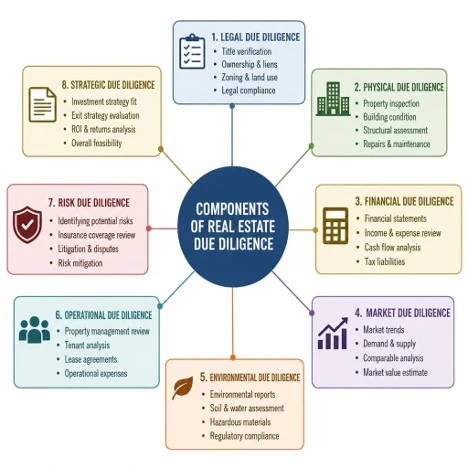
Commercial real estate due diligence is a multifaceted process. It involves a comprehensive evaluation of several key areas. These components ensure a thorough understanding of the property and its potential risks.
The main components of due diligence include:
- Financial analysis for income and expenses
- Legal reviews for title and compliance
- Physical inspections of the property’s condition
- Environmental assessments for contamination risks
Each of these areas requires detailed attention and expertise. Financial analysis determines the property’s economic viability. Legal reviews protect against future disputes and liabilities.
Physical inspections provide insights into potential repairs or maintenance. Environmental assessments safeguard against regulatory issues or health hazards.
Effective due diligence is both systematic and meticulous. Engaging experts in each field is often necessary to uncover potential issues. This helps buyers make smart choices that match their goals.
Financial Due Diligence
Financial due diligence provides a deep dive into a property’s economic standing. It involves a detailed review of financial statements and cash flow. The objective is to verify the financial health of the property and forecast potential returns.
Key areas to evaluate include:
- Income and expense reports
- Lease agreements and tenant creditworthiness
- Capital expenditure forecasts
These elements reveal the property’s profitability and sustainability. Analyzing rental income ensures it aligns with current market rates Checking expenses helps you find savings. It will evaluate commercial real estate cap rates & property condition, and protect your net operating income (NOI).
Understanding the financial aspect is crucial for predicting future profitability. It enables investors to make informed decisions and secure favorable financing. Financial due diligence ultimately helps determine if the investment meets financial expectations.
Legal Due Diligence
Legal due diligence is crucial for avoiding future disputes. It ensures compliance with all applicable laws and regulations. The focus is on identifying any legal encumbrances that may affect the property.
Key activities include:
- Title search to confirm ownership and identify liens
- Reviewing zoning laws and land use restrictions
- Examining existing contracts and legal commitments
Each element provides legal clarity and assurance. The title search confirms that the property is free from disputes or claims. Zoning checks reveal potential limitations on property use. Examining contracts ensures tenant and vendor agreements are valid and enforceable
Legal due diligence mitigates risks related to non-compliance and ensures clear ownership. Buyers must also assess CERCLA environmental liability standards .
Check ADA compliance in due diligence to avoid legal risks. Engaging legal experts can enhance this process, safeguarding against future liabilities. It sets the foundation for secure and conflict-free property ownership.
Physical and Environmental Due Diligence
Physical and environmental due diligence assesses the property’s condition and compliance. It involves a thorough inspection of the building and its systems. This component ensures the property meets current standards and is free from defects.
Essential tasks include:
- Inspecting structural integrity and building systems
- Evaluating utilities and infrastructure
- Conducting environmental audits for contamination
Physical inspections can uncover deferred maintenance or needed repairs. A Property Condition Assessment (PCA) helps buyers budget for future repairs.
Meanwhile, environmental audits identify potential liabilities from past contamination or current regulatory breaches. Check the latest ASTM Phase I ESA standard changes to ensure regulatory compliance. Compare Phase I vs Phase II ESA costs before planning your budget.
Addressing both physical and environmental aspects prevents unforeseen costs and legal issues. It also ensures compliance with environmental laws, avoiding costly remediation efforts. This diligence helps confirm the property’s suitability for intended use and future plans.
The Due Diligence Process: Step-by-Step
The due diligence process in commercial real estate unfolds through several systematic steps. Each step is crucial for ensuring informed decision-making. The process provides a comprehensive evaluation of all property aspects.
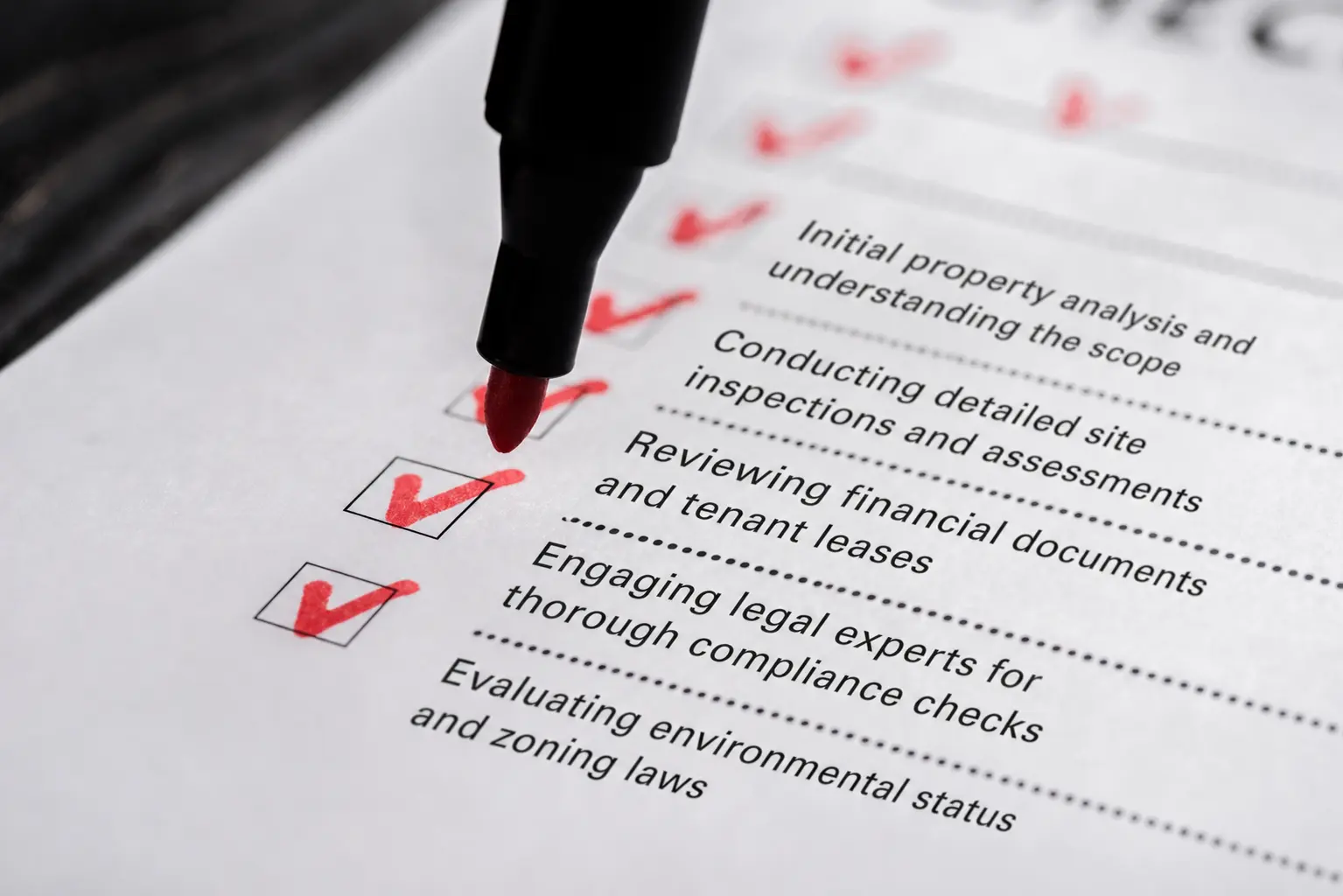
The typical steps include:
- Initial property analysis and understanding the scope
- Conducting detailed site inspections and assessments
- Reviewing financial documents and tenant leases
- Engaging legal experts for thorough compliance checks
- Evaluating environmental status and zoning laws
An initial property analysis sets the groundwork by defining objectives and focus areas. This stage helps tailor the subsequent investigation to the property’s specific needs. Site inspections follow, where experts evaluate the physical condition and uncover maintenance needs.
Reviewing financial documents is next, involving income statements and expense evaluations. This step reveals the property’s economic health and viability. Simultaneously, legal reviews ensure compliance with all relevant regulations.
The final stages involve examining environmental factors and zoning laws. These evaluations identify any potential restrictions or liabilities. Completing these steps systematically ensures no critical detail goes overlooked. This thorough approach empowers stakeholders with the information needed for successful transactions.
Common Challenges and How to Overcome Them
Navigating due diligence in commercial real estate presents several challenges. These obstacles can complicate the evaluation process, leading to potential pitfalls. Understanding these issues helps in developing strategies to address them.
Common challenges include:
- Incomplete or inaccurate financial records
- Hidden environmental issues
- Legal compliance complexities
Inaccurate financial records can obscure the property’s true value. To overcome this, hire experienced accountants to verify documentation thoroughly. Hidden contamination is a major risk. Watch out for historical gas stations, dry cleaners, or industrial parks.
Spot emerging chemicals early with PFAS due diligence. Check hazardous building materials under federal asbestos regulations. Avoid expensive liabilities after the deal closes.
Legal compliance often presents intricate challenges. Consulting with legal professionals ensures all regulatory obligations are met. These steps help turn challenges into opportunities, securing a smoother transaction. Employing proactive strategies maintains control over the due diligence process.
Best Practices for Effective Due Diligence
Implementing best practices ensures a thorough and efficient due diligence process. These practices help streamline assessments and uncover crucial property insights. Knowing what to prioritize is key.
Some recommended practices include:
- Engaging experienced professionals, such as lawyers and inspectors
- Conducting a comprehensive market analysis
- Maintaining detailed records of all findings and evaluations
Experienced professionals provide essential expert insights. Learn how to get approved for a commercial loan with proper documentation.Meet strict Freddie Mac PCA multifamily underwriting guidelines to avoid closing delays.
Market analysis reveals property performance trends and competitive positioning. Maintaining organized records ensures that no detail is overlooked. These practices collectively support informed decision-making. They reduce risk, build buyer confidence, and lead to successful deals.
Leveraging Due Diligence Archives and Historical Data
Using historical data can significantly boost the due diligence process. Archives provide past transaction insights and reveal property trends.
Key benefits include:
- Understanding past property performance
- Identifying previous legal or environmental issues
- Benchmarking current values against historical norms
The information gained from these archives aids in predicting future property performance. Recognizing historical patterns and issues can inform better investment decisions and strategies, ensuring a sound investment approach.
Frequently Asked Questions
The timeframe typically ranges between 30 to 60 days, depending on the size and complexity of the property. A Phase I ESA checks for environmental risks, historical contamination, and hazardous chemicals. A PCA inspects key building systems like the roof, HVAC, plumbing, and structure. It uses these findings to estimate future repair and maintenance costs (CapEx).
A Phase I ESA checks for environmental risks. It identifies past contamination and hazardous chemical issues.
A Property Condition Assessment (PCA) focuses on the physical building. It inspects key systems like the roof, HVAC, foundation, and plumbing.
This assessment helps buyers project repair and maintenance costs (CapEx). It estimates both immediate fixes and long-term expenses.
Buyers can ask for seller credits to offset costs. They can require the seller to fix issues before closing.
They can also negotiate a lower purchase price to cover repair expenses. With a due diligence contingency clause, buyers can walk away with their earnest money.
Discovering major issues provides crucial negotiation leverage. Buyers can request seller credits, require remediations prior to closing, adjust the purchase price to account for remediation/repairs, or walk away without forfeiting earnest money if protected by due diligence contingency clauses.
Conclusion: The Value of Thorough Due Diligence
Thorough due diligence is crucial in commercial real estate to minimize risks. It ensures informed decisions based on comprehensive property evaluations.
Skipping these steps can lead to unforeseen pitfalls and financial losses. With a diligent approach, investors can secure their interests, enhancing long-term success. In the world of real estate, knowledge is power.
Due diligence turns potential risks into strategic advantages. It safeguards investments. It helps maximize returns.