


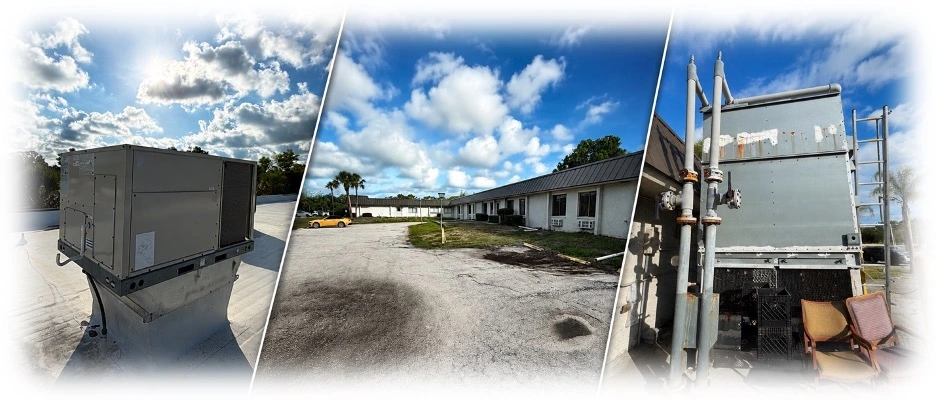
Blog Overview:
This article explains capitalization (cap) rates. It shows you how to calculate them. It also covers what determines a good rate.
This article highlights how hidden physical defects can ruin your expected returns. It also explains why a Property Condition Assessment (PCA) is essential. This crucial report protects your commercial real estate investment.
Who This Blog Is For:
We wrote this guide for commercial real estate buyers, developers, and investors. It also helps lenders and regional stakeholders. You will get a simple, clear understanding of physical asset risks. Most importantly, it shows how these physical defects hurt your financial returns.
If you are stepping into the world of commercial real estate, you will quickly hear people talk about the “cap rate.” It is one of the most common phrases used by investors, buyers, and lenders. But what does it actually mean?
In simple terms, a cap rate is short for capitalization rate. It is a tool used to estimate your potential investment return. It helps you see how much money a real estate property can make. Think of it as a quick snapshot that shows how much money a property can make relative to its purchase price.
Imagine you are buying a commercial building entirely with cash. The cap rate tells you your expected yearly return percentage. It shows what you get back from the property’s net income.
This tool helps you compare different properties quickly. You do not have to worry about complicated mortgage details. It lets you look at the numbers without getting bogged down by loan interest rates.
How to Calculate a Cap Rate
Calculating a cap rate is surprisingly straightforward. You only need two main pieces of financial information:
- Net Operating Income (NOI): First, calculate all the money the building generates from rent and other sources. Next, subtract your daily operating expenses. This means you subtract property taxes, insurance, maintenance, and management fees. It does not include mortgage payments.
- Current Market Value or Purchase Price: This is what the property is
- worth or what you are paying to buy it.
The Cap Rate Formula
The mathematical formula looks like this:

To turn this number into a percentage, you simply multiply the result by 100.
A Real-World Example
Let us look at a simple example to see how this works in real life:
- You find a small retail building listed for sale at $1,000,000.
- First, you collect the rent from the building. Then, you pay for your taxes, insurance, and routine repairs. After covering those costs, the building generates a Net Operating Income (NOI). This leaves you with exactly $70,000 per year.
Using our formula, you divide $70,000 by $1,000,000:
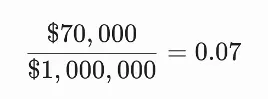
Multiply 0.07 by 100, and you get a 7% cap rate. This means that if you buy the building with cash, your annual return on that investment is 7%.
What is a Good Cap Rate?
There is no single number that counts as a “good” cap rate everywhere A good cap rate depends entirely on your personal goals. It also depends on the location of the property.
Finally, it depends on the amount of risk you are willing to take.
Generally speaking, commercial real estate cap rates usually fall between 4% and 10%. To understand whether a cap rate is good for your specific deal, you have to look at the relationship between risk and reward.
Low Cap Rates (4% to 6%)
A lower cap rate usually means the property has lower risk. These properties are often in prime locations. They sit in highly desirable areas. You can find them in the center of a major city.
They usually have reliable, high-quality tenants. They also have a steady rental history.
Because the property is safe and predictable, buyers pay a higher price. This high demand drives the cap rate down. You will get a smaller annual percentage return, but your money is very secure.
High Cap Rates (7% to 10%+)
A higher cap rate means the property carries more risk. These buildings might be in smaller towns, older neighborhoods, or areas where the local economy is struggling.
The tenants might have short-term leases, or the building itself might need noticeable repairs. Because there is a higher chance that things could go wrong, buyers demand a bigger annual return to justify the risk.
When asking what a good cap rate is, compare the building to similar properties. Make sure you look at the exact same neighborhood.
A 5% cap rate might be fantastic for a brand-new downtown office building. However, it would be a poor return for an older warehouse in a rural town.
The Hidden Variable: Property Condition Assessments
When you calculate a cap rate on paper, the math always looks perfectly clean. You take the income, subtract the current expenses, and get your percentage. But there is a massive trap that catches many investors off guard: unseen property defects.
This is where a Property Condition Assessment (PCA) becomes absolutely essential.
A Property Condition Assessment is a thorough evaluation of a commercial building. It is a completely independent physical inspection. An expert walks the property and looks closely at every major system.The inspection includes the roof and foundation.
Assessors also evaluate the heating and cooling units (HVAC), plumbing, electrical systems, and parking areas.
After the inspection, they deliver a detailed report. This report outlines the current physical health of the building.
Most importantly, the report lists immediate building repairs. It tells you what the property needs right now. It also forecasts costly replacements you will face over the next 10 to 20 years.
How Physical Defects Destroy Your Calculated Cap Rate
Buying a commercial property without a Property Condition Assessment is risky. Without it, your calculated cap rate will probably be incorrect.
Physical building problems damage your financial returns in two separate ways. First, they force you to pay for immediate capital expenses. Second, they cause a permanent drop in your Net Operating Income.
1. The Immediate Capital Expense Surprise
Let us go back to our earlier example. You buy a retail building for $1,000,000 because the seller’s financial paperwork shows an NOI of $70,000. You are expecting a comfortable 7% cap rate.
Three months after closing the deal, the building’s roof begins to leak severely.
A roofing contractor inspects the property. They inform you that the entire roof is dead. You must replace it completely.
The cost of a new commercial roof is $150,000.
Suddenly, your real investment in the property is no longer just the $1,000,000 purchase price. You have now spent a total of $1,150,000. If we rerun the cap rate calculation with your true total cost:
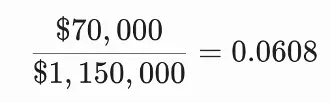
Your true return has instantly dropped from a strong 7% down to 6.08%. An uninspected physical defect completely alters the financial reality of your investment.
2. The Drag on Net Operating Income
Physical problems do not just demand large, unexpected checks; they also actively drain your annual income.
If a building has aging, inefficient heating and cooling systems, your utility bills will skyrocket. If the plumbing is failing, you will constantly pay plumbing bills to patch leaks. These ongoing repair costs count as operating expenses. Because they are regular expenses, they directly reduce your Net Operating Income.
If your NOI drops from $70,000 down to $55,000 because of constant emergency maintenance, your return on that $1,000,000 purchase price falls to 5.5%.
A run-down property will cause problems over time. If a building looks bad or has frequent maintenance issues, good tenants will eventually leave. Vacant spaces mean zero rent income, which completely destroys your cap rate.
Using a PCA to Protect Your Capital and Negotiate Better
A Property Condition Assessment gives you the facts you need. These facts protect your investment. Make sure you get them before you sign the final papers. When you know the true physical state of the building, you can adjust your financial models to reflect reality.
If the PCA report reveals that the building needs $80,000 in immediate repairs, you have real power. You can go back to the seller with the report in hand and negotiate. You can ask them to lower the purchase price by $80,000, or you can ask them to fix the issues before the sale closes.
By adjusting the purchase price downward to cover the cost of the repairs, you preserve your target cap rate. You ensure that you are making a calculated, smart investment rather than taking an expensive gamble.
Conclusion: Look Beyond the Numbers on the Page
Cap rates are an excellent way to start evaluating a real estate deal. They allow you to screen properties quickly and find opportunities that match your financial goals. However, a cap rate is only as reliable as the data used to calculate it.
Never trust a financial spreadsheet blindly. Always combine your financial analysis with a professional Property Condition Assessment.
You must evaluate both the numbers on the balance sheet and the physical reality of the building.
Doing this allows you to invest with total confidence. It protects your hard-earned capital.
Most importantly, it ensures your real estate assets remain truly profitable for years to come.
Commercial Real Estate Cap Rates & PCA: Frequently Asked Questions
A good cap rate usually falls between 5% and 10%.A higher cap rate means a higher potential financial return. However, it also indicates a higher investment risk.
In strong markets like Houston and Dallas, cap rates are often lower because properties are in high demand
The formula is very simple.
You divide the Net Operating Income (NOI) by the purchase price of the building.
Doing this allows you to invest with total confidence. It protects your hard-earned capital.
Most importantly, it ensures your real estate assets remain truly profitable for years to come.
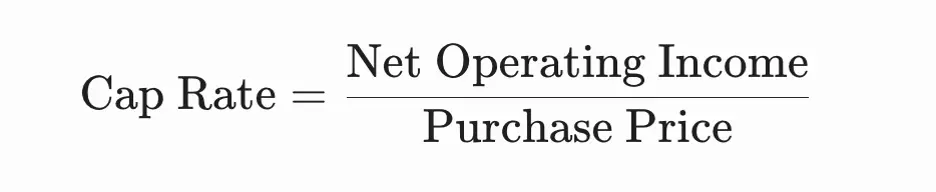
This calculation gives you a quick snapshot of your expected yearly cash return.
Yes, a Property Condition Assessment (PCA) can directly change the cap rate. A PCA uncovers hidden physical defects on the property.
If the building needs massive repairs, your true return goes down. This higher risk might force you to negotiate a higher cap rate. It can also help you get a lower purchase price.
A PCA is an official engineering checkup of the entire property. An expert inspector reviews the roof, foundation, and structural walls.
They also check heavy mechanical systems like the HVAC, plumbing, and electrical panels.
The final report highlights immediate repairs and lists future building costs.
Operating expenses are daily costs used to keep the building running. This includes property taxes, insurance, and simple maintenance.
Capital Expenditures (CapEx) are major, long-term upgrades. Replacing an entire commercial roof or buying a new HVAC system counts as CapEx.
Yes, sudden repairs can heavily reduce your Net Operating Income (NOI). Unexpected roof leaks or broken pipes count as instant maintenance expenses.
These sudden costs eat directly into your profits for that year. When your NOI drops unexpectedly, your actual investment return drops with it.
Yes, most commercial lenders require a certified PCA before approving a loan. Banks want to ensure their financial investment is protected. They want to safeguard their financing fully.
They need to know the building has a stable foundation and sound structural integrity. Skipping a PCA can cause a lender to deny your commercial real estate financing.
Why SKA Environment?
- Deep Sector Expertise
Our team brings a decade of experience to your project. We focus entirely on the environmental sector.
- National Reach, Local Insights
Our experienced team works all across the United States. We have written and reviewed thousands of property reports. We know exactly how to uncover the hidden physical and regulatory risks that threaten your financial returns.
- Capital Protection
Our team delivers clear, dependable due diligence. This vital information protects your investment capital from risk. It ensures your development timelines keep moving forward without any delays.
Request a Property Condition Assessment
Buying or financing a commercial property? Request a Property Condition Assessment before you finalize your investment decision.
Contact SKA Environment today to discuss your specific project needs. We will give you a clear, comprehensive quote for your site.