

More results…

Environmental Consulting Firms in Texas
Commercial Real Estate Reviews
Commercial property deals in Texas move fast. Banks need site checks before approving loans. These checks find soil pollution and building defects early. Therefore, buyers avoid unexpected repair costs.
SKA Environment provides complete inspection services across Texas. Our team protects buyers from state cleanup laws. Thus, property deals stay on schedule.
Read our Commercial Indoor Air Quality Testing Cost Guide.
Cost-Effective Environmental Due Diligence
Our team handles your Phase I Environmental Site Assessments from start to finish. Senior Environmental Professionals with at least 10 years of experience lead our team. Furthermore ,because SKA is a mid-size company, we don’t have the heavy corporate overhead of larger firms.
We pass these savings directly to you. As a result, your assessment costs stay low. However, we never cut corners on quality. In fact, every report strictly follows all regulatory standards.
For a detailed breakdown of the variables that influence pricing, read our guide on Phase I ESA cost factors.
Our team easily handles large, multi-site commercial portfolios. Additionally, we have the deep resources to beat short deadlines.
Learn more about how we keep things accurate across massive property groups in our portfolio overview, Precision at Scale.
Comprehensive ASTM E1527-21 Standards
We write our reports strictly to the newest ASTM E1527-21 standards. This guarantees you meet all All Appropriate Inquiries (AAI) requirements. Our team tailors the work to your specific needs.
Clients get a perfect match for every investor rule and lender guideline. This ensures full compliance with agency protocols. Consequently, we help you clear both Fannie Mae and Freddie Mac environmental rules without the typical headaches.”
Phase I Site Assessment
Phase I ESA Scope of Work
A Phase I ESA checks past land use to find risks. Inspectors review government files, old maps, and site records. Additionally, site visits help find hidden tanks and chemical spills.
This review protects buyers from past cleanup liabilities. Finding risks early helps buyers negotiate prices.
See our CERCLA Environmental Liability: National Guide.
An ultimate tool for proactive property maintenance and long-term risk management. The process involves a structured, multi-step investigation:
Site Visit & Field Reconnaissance:
Our team walks the property and checks visible areas. Specifically, inspectors look for hazardous materials, petroleum products, chemical stains, storage issues, and other signs of environmental concern.
To see why hands-on inspections are vital for finding hidden issues, read why you must master Phase I ESA interviews and site recon.
Historical Records Review:
An accurate Phase I ESA checks the property for possible pollution. In addition, it reviews nearby land for hidden contamination or other environmental concerns.
We will check local planning records and USGS historical topographic maps.
Historical Red Flags:
We check Sanborn fire insurance maps and state oil and gas maps to find past risks. We design this screening to find historical red flags early.
Specifically, our inspectors look closely for dry cleaners, gas stations, and industrial parks. Consequently, these three business types trigger the worst soil and groundwater liabilities.
Geology and Hydrogeology Evaluation:
We analyze local soil types and geological settings. We also check the regional groundwater depth.
Ultimately, this helps us evaluate how potential contamination could migrate through the property.
Regulatory Agency Research:
We evaluate federal, state, tribal, and local environmental databases. This includes checking records from fire departments and state environmental agencies.
We scan standard search distances around your property. This helps us find nearby chemical releases or contaminated sites.
Interviews & Document Review:
We interview past and current owners, site occupants, and neighbors. We also speak with local government officials.
Finally, we conduct a detailed review of any prior environmental reports.

Phase II Site Assessment
Phase I vs Phase II Scope Requirements
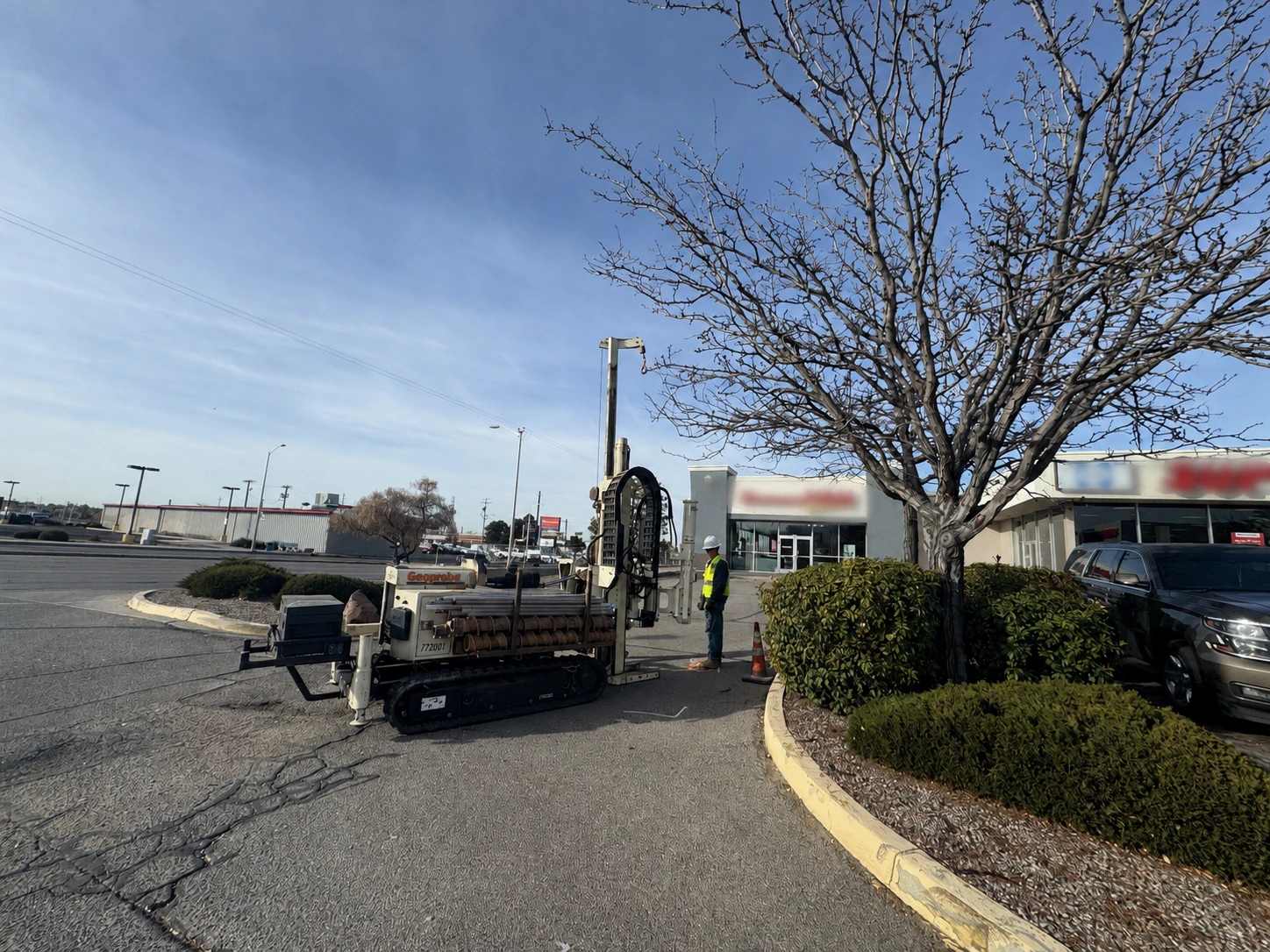
A standard Phase I scope does not include laboratory analysis. It does not test soil or groundwater. It also skips soil vapor sampling. Therefore, understanding Phase I vs Phase II ESA costs is essential for accurate transaction budgeting.
If the assessment flags recognized environmental conditions (RECs), you must investigate further. Consequently, our team will then create a customized testing plan tailored to your specific site. Specifically, this is because one Phase II environmental scope doesn’t fit all.
If we find volatile organic compounds (VOCs) on site, you must act fast. You must plan for the technical realities of using vapor barriers and engineering controls to protect the property.
Beyond Environmental Liability:
Comprehensive Technical Due Diligence
Managing chemical contamination is vital for protecting your investment. Specifically, a property’s physical and structural health also directly impacts your bottom line. Hidden physical defects, structural issues, or mechanical failures can cause serious financial problems.
These hidden issues can severely degrade your Net Operating Income (NOI). Therefore commercial buyers must look at both risks to get full protection. For example, you should pair your environmental screening with a physical structural review.
Read our complete guide to learn about understanding NOI and Property Condition Assessments (PCAs). It explains how long-term planning keeps your money safe. You will see exactly how capital expenditure forecasting protects your investments.
Regulatory Compliance and Asset Protection
Physical due diligence must also cover regulatory compliance risks. Furthermore, these critical issues often go completely unnoticed until after closing. Failing to spot architectural barriers can lead to massive remediation costs.
Finding hidden ADA compliance issues is a major risk in due diligence. As a result, every investor must account for these potential expenses early.
Modern firms are moving away from old-school methods to catch these defects. Instead, they are utilizing AI and advanced technology in Property Condition Assessments. As a result, this allows them to build dynamic, predictive data models well before closing.
Property Condition Assessment
What is Property Condition Assessment
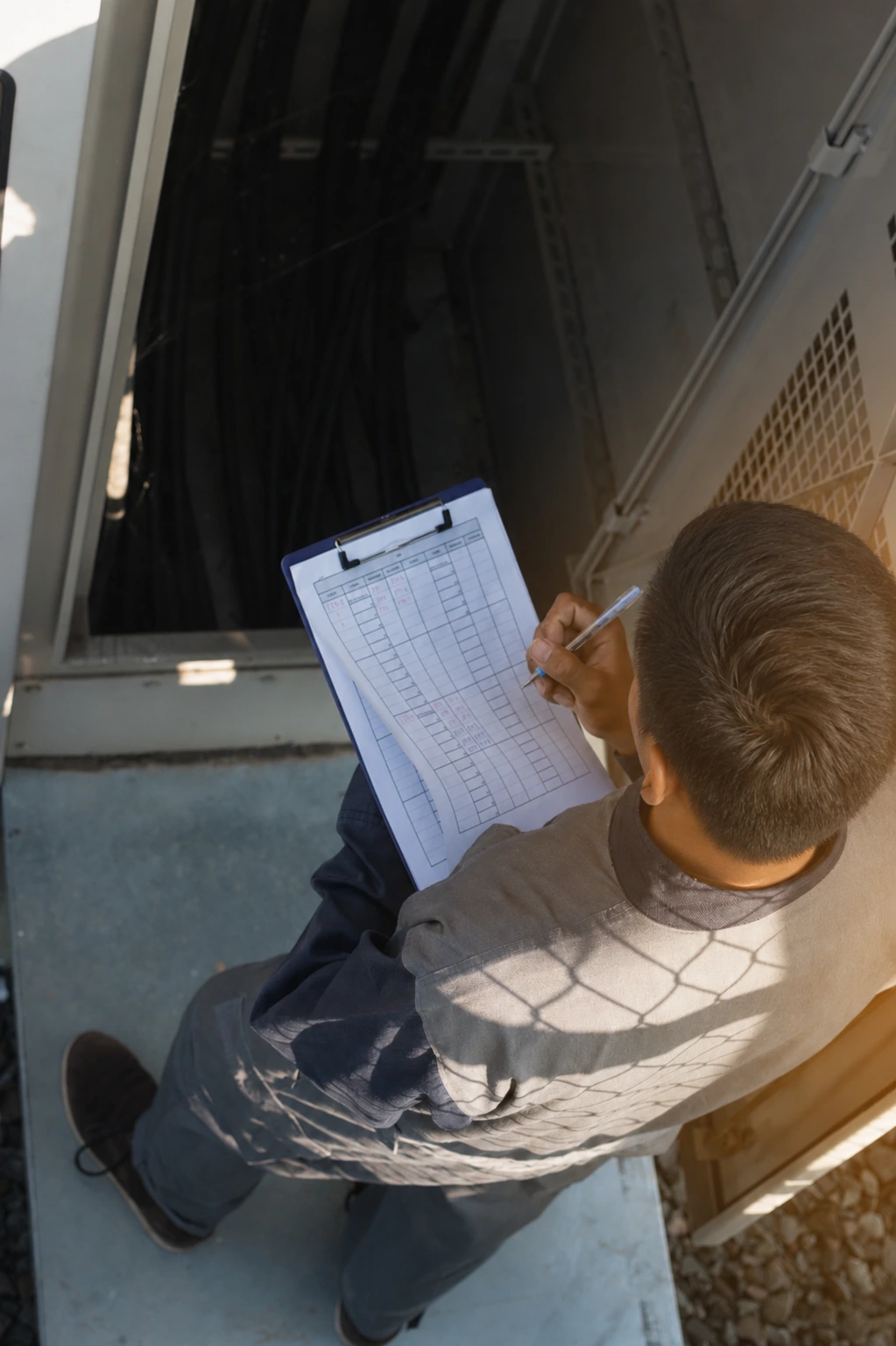
Property Condition Assessments check physical building systems. Inspectors check roofs, walls, parking lots, plumbing, and HVAC units. Reports list urgent repairs and short-term replacement costs.
Detailed reports give lenders clear insights into building health. Physical building checks prevent unexpected repairs.
Learn more in Understanding NOI and Property Condition Assessments.
Texas Stormwater Compliance
Phase I vs Phase II Scope Requirements
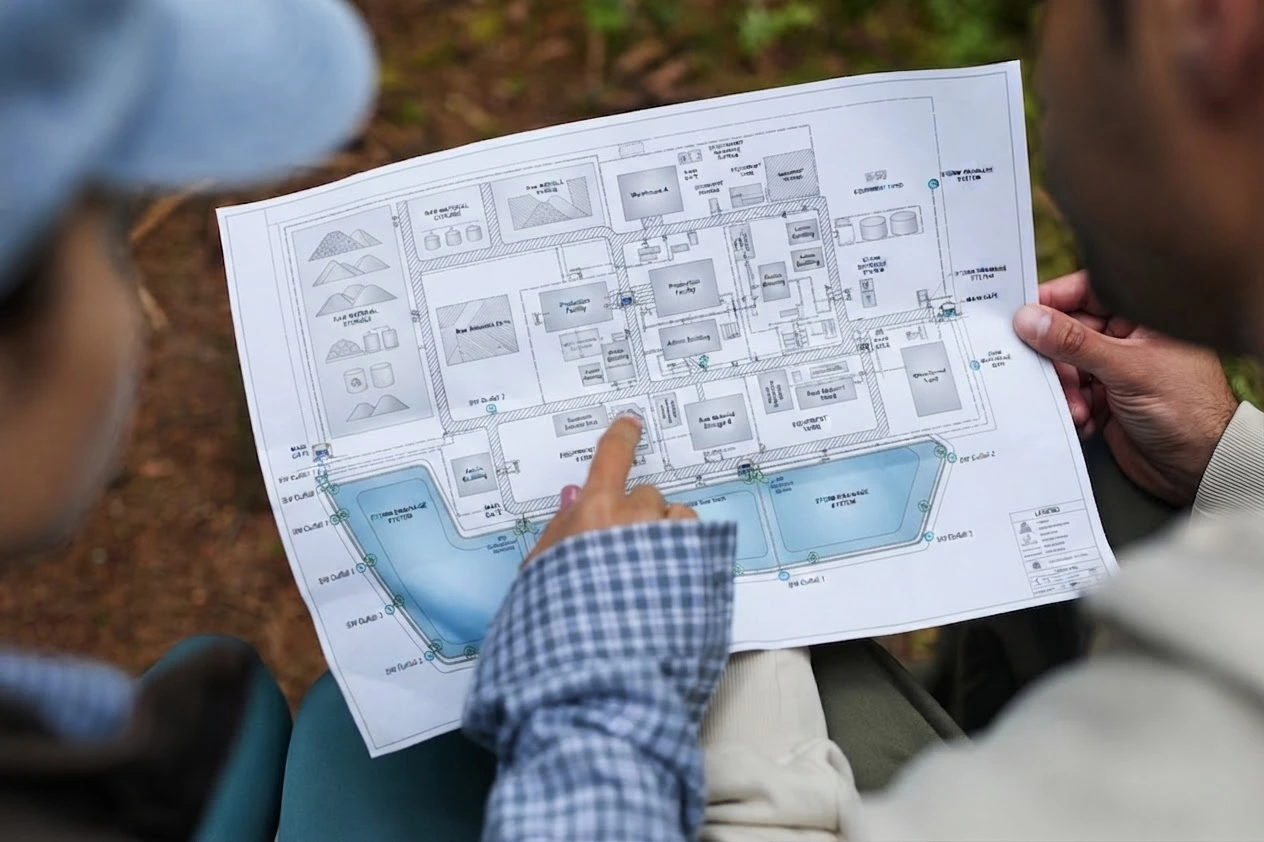
Industrial sites must control rainwater runoff under state rules. Facilities and construction projects need a Stormwater Pollution Prevention Plan. Installing control barriers stops mud, oil, and metals from leaving site grounds.
Field teams handle permit submittals and collect rain samples. Active permits prevent harsh state fines and site shutdowns.
Review the Texas Industrial Stormwater Permit: 2026 Renewal Guide.
Wetland Delineation Studies
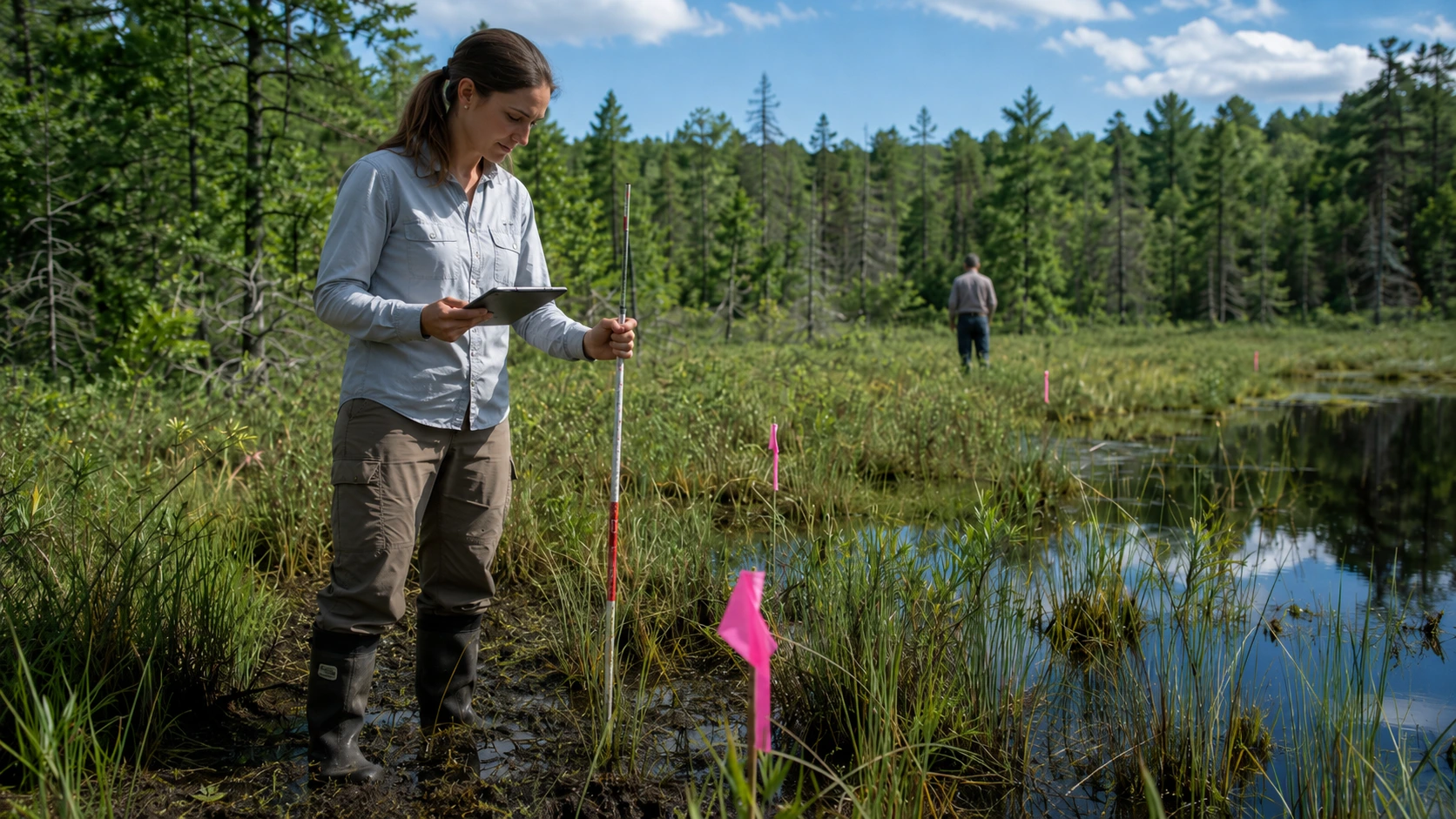
Projects near water bodies require formal wetland studies. Field experts test soil types, water plants, and drainage. Accurate mapping marks protected water lines under federal rules.
Finding protected waters early prevents construction delays and state fines. Specialists manage filings to secure official government permits.
See pricing factors in Phase I ESA Cost: A Commercial Buyer’s Guide.

ADA Inspections and Zoning
ADA checks ensure facilities meet federal accessibility rules. Inspectors measure doors, ramps, parking spaces, and restrooms. Fixing access barriers protects property owners from lawsuits.
Zoning reports verify permitted land uses, building heights, and parking counts. Complete zoning reviews confirm that property plans match city rules.
Read about risks in The Invisible Risk: ADA Compliance in Due Diligence.
Our Service Areas
SKA conducts Phase I Environmental Site Assessment projects nationwide across all 50 states. Our firm has deep experience navigating regional regulatory frameworks.
SKA provides specialized environmental consulting services throughout Texas.
Our Environmental Consulting services are also available in major Texas markets, including:
Houston (Phase I ESA & Property Condition Reports)
Dallas (Phase I Environmental Site Assessments)
Austin (Tech Sector Commercial Real Estate / Urban Infill Property Assessments)
San Antonio (Commercial Property Environmental Due Diligence )
Fort Worth (Logistics, Industrial, and Commercial Property Inspections)
El Paso (Logistics and Industrial Phase I ESAs)
Corpus Christi (Coastal, Port, and Industrial Environmental Site Assessments)
Bakersfield (Central Valley Commercial and Industrial Property Inspections)
Plano (Corporate Headquarters and Commercial Office Due Diligence)
Lubbock (West Texas Agricultural and Commercial Environmental Assessments)
Laredo (Inland Port Logistics and Commercial Property Phase I ESAs)
The Woodlands (Master-Planned Commercial and Corporate Office Due Diligence)
Midland (Permian Basin Energy and Commercial Real Estate Environmental Services)
McAllen (Rio Grande Valley Commercial and Industrial Real Estate Due Diligence)
Amarillo (Texas Panhandle Agricultural and Commercial Phase I ESAs)
Waco (Central Texas I-35 Corridor Commercial Property Due Diligence)
College Station (Research Valley and Commercial Real Estate Environmental Assessments)
Katy (Greater Houston Suburban Commercial and Retail Due Diligence)
Brownsville (Deepwater Port and Borderplex Industrial Site Assessments)
Contact Us for a Site-Specific Quote
Please feel free to call us at 1-281-598-8671. You can also email us at info@skaenvironment.com. We will provide a competitive, site-specific price and turnaround time for your property.

Quick Links
Services
Contact Info
Operational Footprint & Service Areas
Actively serving the following locations and available for professional consulting assignments nationwide.
Alabama
Birmingham, Montgomery, Cullman, Mobile, Huntsville
Arizona
Scottsdale, Phoenix, Tucson, Mesa, Tempe
Arkansas
Springdale, Little Rock, Fayetteville, Fort Smith
California
Sacramento, San Fernando, Los Angeles, Wasco, Pasadena, Oxnard, San Diego, San Francisco, Fresno, Riverside
Colorado
Denver, Aurora, Colorado Springs, Fort Collins, Boulder
Connecticut
Hartford, Windsor, Stamford, New Haven, Danbury
Illinois
Arcola, Chicago, Springfield, Naperville, Peoria
Louisiana
Sulphur, New Orleans, Baton Rouge, Lafayette, Shreveport
Maryland
Waldorf, Baltimore, Frederick, Rockville, Gaithersburg
Massachusetts
Lowell, Boston, Worcester, Springfield, Cambridge
Minnesota
Albany, Morris, Ivanhoe, Minneapolis, St. Paul, Rochester, Duluth
Missouri
O’Fallon, Florissant, St. Louis, Kansas City, Springfield
Nebraska
Omaha, Scottsbluff, Lincoln, Grand Island, Kearney
New Mexico:
Albuquerque, Santa Fe, Carlsbad, Las Cruces, Roswell, Rio Rancho
New York
Hudson, New York City, Albany, Buffalo, Rochester, Yonkers
Ohio
Cleveland, Columbus, Franklin, Euclid, Cincinnati, Dayton, Toledo, Akron
Pennsylvania
Horsham, Quakertown, Bethlehem, Philadelphia, Pittsburgh, Allentown, Erie
Texas
Houston, Austin, San Antonio, Waco, Snyder, Amarillo, Dallas, El Paso, Corpus Christi, Laredo, Lubbock
Virginia
Manassas, Virginia Beach, Norfolk, Richmond, Alexandria
Wisconsin
Boscobel, Milwaukee, Madison, Green Bay, Kenosha
Washington
Pullman, Clallam Bay, Seattle, Spokane, Tacoma, Bellevue
Copyright © 2026. All rights reserved.