


Buying commercial real estate is an exciting milestone. It can grow your wealth or expand your business operations. However, beneath a perfect building layout or a prime location, hidden dangers can lurk in the soil and groundwater.
In property deals, these dangers are known as environmental liabilities. If you buy a contaminated site, you might have to pay for the cleanup. These cleanups often cost hundreds of thousands—or even millions—of dollars. This remains true even if you did not cause the pollution yourself.
This is why smart buyers use a Phase I Environmental Site Assessment (ESA). A Phase I ESA acts as a background check for a piece of land. An environmental expert looks at historical records, photos, and the site itself to spot problems.
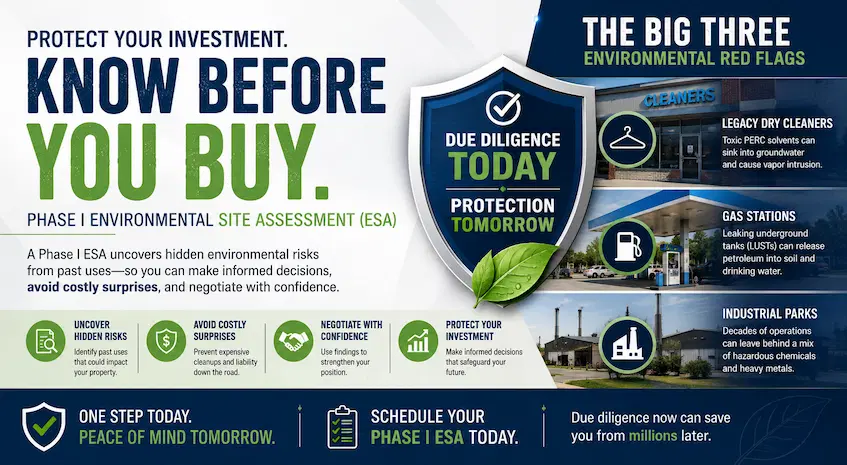
While any property can have issues, three specific past uses trigger instant alarms for lenders and experts. Let us explore the “Big Three” environmental red flags and find out why they matter to your wallet.
1. Legacy Dry Cleaners: The Silent Chemical Danger
You might look at a peaceful retail strip mall and see a great investment. But if one of those units was a dry cleaner twenty years ago, you need to step back and look closer. Dry cleaners are among the most common sources of severe commercial land pollution.
The Problem: PERC
For decades, most dry cleaners used a liquid chemical solvent called perchloroethylene, or PERC for short. PERC is excellent at removing stains from clothes, but it is highly toxic to human health and the environment.
How It Escapes
PERC is a heavy, unique chemical. Unlike oil, it does not float on water. Instead, it sinks rapidly.
Over years of normal business, small spills happen. Workers might pour traces down floor drains. Tiny amounts leak out of machines.
Because PERC is thin and heavy, it travels straight through solid concrete floors. From there, it goes directly into the dirt below.
The Long-Term Risk
Once PERC hits the dirt, it keeps sinking until it reaches the groundwater. From there, it can form a toxic underground cloud that travels far beyond your property line.
Even worse, PERC can turn into a gas. This gas can rise back up through the floor grids of your building. This process is called vapor intrusion, and it can ruin the air quality inside an entire office complex.
Why Dry Cleaners are Tricky: A dry cleaner does not need to be open today to cause a problem. A shop that closed down in 1985 can leave behind toxic chemical plumes that remain highly dangerous right now.

2. Gas Stations: The Risk of Underground Tanks
Gas stations are highly visible, and almost everyone knows they carry environmental risks. However, old gas stations that are long gone can leave behind hidden, complex risks.
The Problem: Leaking Underground Storage Tanks (LUSTs)
Gas stations store their fuel out of sight in massive tanks buried under the pavement. These are called Underground Storage Tanks, or USTs. Older tanks made before the mid-1980s were built from bare steel. Over time, bare steel in damp soil rusts and corrodes, creating small holes.
How It Escapes
Fuel leaks out of these corroded holes slowly. An underground tank can leak thousands of gallons of gas into the earth. This can happen before the owner even notices a change in fuel levels.
Modern tanks use double walls and smart sensors to stop leaks. However, old, legacy tanks are a completely different story.
The Long-Term Risk
Gasoline contains chemicals like benzene, toluene, and xylene. Benzene is a known carcinogen, meaning it causes cancer. If gasoline leaks into the local drinking water supply, it creates an immediate public health emergency. Cleaning up a petroleum leak requires digging up tons of dirt and running expensive water filtering equipment for years.
3. Industrial Parks: The Multi-Hazard Mixed Bag
An industrial park or manufacturing plant might seem like a solid, high-income asset. However, these sites often host many different businesses over time. Each past business introduces its own set of environmental worries.
The Problem: A Mix of Waste
Industrial parks rarely do just one thing. Over fifty years, one industrial building could have housed an auto shop, a print shop, and a chemical warehouse.
How It Escapes
Industrial operations use heavy machinery, fuels, degreasers, and raw chemical ingredients. Pollution on these sites usually happens because of bad waste disposal habits from decades past.
Before the 1970s, it was common to dump toxic fluids right into the ground or local ponds.
The Long-Term Risk
Industrial parks often face “mixed plumes.” This means the soil contains a messy blend of heavy metals (like lead and chromium), petroleum, and harsh industrial solvents. These cleanups are complicated because different chemicals need different treatments. This drives up costs fast..
The “Neighbor” Problem: Your building might have only stored clean cardboard boxes. But if your next-door neighbor was a battery factory, their pollution could easily crawl underground and ruin your soil.
How a Phase I ESA Protects You
If you plan to buy a property that fits into any of these three categories, you should never skip your due diligence. A Phase I ESA is your primary shield against massive financial loss.
he expert will check old photos, business records, and fire department files. They will find out if a dry cleaner or gas station ever operated on the site, even if it was decades ago.
If the Phase I ESA finds evidence of these past uses, it will label them as a Recognized Environmental Condition (REC).
Finding a REC does not mean your property deal is dead. It simply means you need to do a Phase II ESA, which involves taking actual soil and water samples to see if pollution is truly there.
The Takeaway
Knowledge is power in commercial real estate. Dry cleaners, gas stations, and industrial parks are classic red flags, but they do not have to be deal-breakers.
By ordering a Phase I ESA early in your closing timeline, you can find out about hidden issues before you sign on the dotted line. This simple step keeps your investment safe, your liability low, and your financial future clear.