


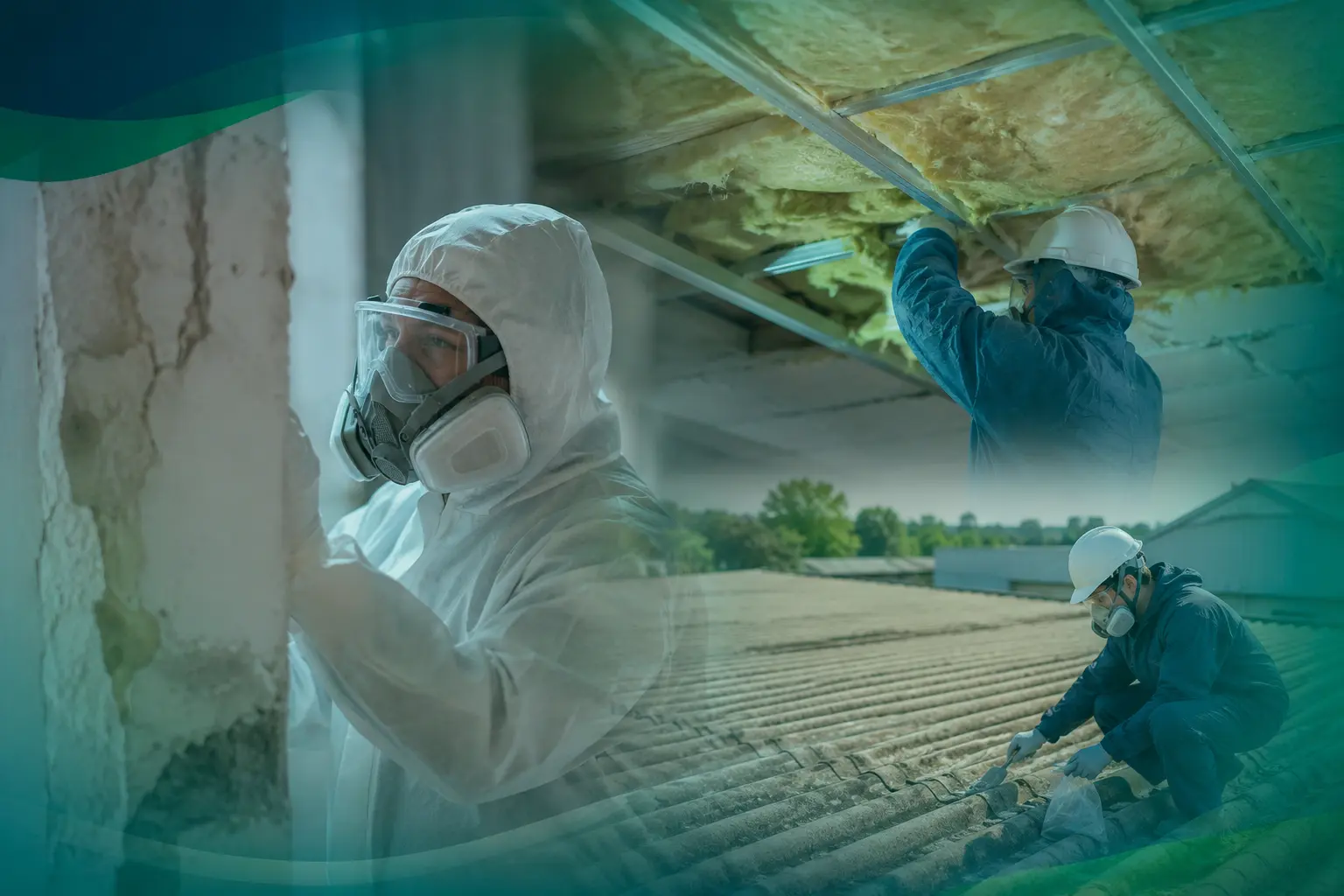
Asbestos can still create serious problems for property owners, contractors, and developers.
Even though many uses of asbestos have been restricted or banned, asbestos-containing materials remain in older buildings across the United States. Floor tiles, insulation, roofing materials, pipe coverings, textured coatings, and other building materials may contain asbestos.
That is why understanding asbestos regulations before starting renovation, demolition, or repair work is important.
Federal rules from the Environmental Protection Agency (EPA) and Occupational Safety and Health Administration (OSHA) apply to many asbestos-related activities. In Texas, additional requirements are enforced by the Texas Department of State Health Services (DSHS).
This guide explains the main laws regarding asbestos, when testing may be needed, and what property owners in Houston should know.
Who Should Read This Guide?
This guide is useful for:
● Commercial property owners
● Real estate developers
● Construction companies
● Property managers
● Building owners planning renovations
● Contractors
● Facility managers
● Buyers performing environmental due diligence
If your project involves an older building or materials that could contain asbestos, professional asbestos inspection and testing may help you avoid unexpected risks.
What Are the Main Laws Regarding Asbestos?
There is no single asbestos law that covers every situation.
Instead, asbestos is regulated through several federal and state programs.
Some of the most important include:
EPA Asbestos Regulations
The EPA asbestos program regulates asbestos under several federal laws.
One of the most important rules for commercial properties is the Asbestos National Emission Standards for Hazardous Air Pollutants, commonly called Asbestos NESHAP.
The rule is found under 40 CFR Part 61, Subpart M.
It establishes requirements for certain demolition and renovation activities. Its goal is to limit the release of asbestos fibers into the air.
For many regulated demolition or renovation projects, a thorough asbestos inspection must be completed before work begins.
Is Asbestos Completely Banned in the United States?
This is a common source of confusion.
In March 2024, the EPA finalized a rule prohibiting ongoing uses of chrysotile asbestos, which was the only asbestos type still known to be imported, processed, or distributed for ongoing use in the United States.
Different uses have different phase-out deadlines.
However, the new rule does not mean that asbestos has disappeared from existing buildings.
Older construction materials may still contain asbestos. EPA’s evaluation of these “legacy uses” includes materials such as insulation, floor and ceiling tiles, pipe coverings, shingles, and other older products.
For property owners, this means asbestos inspections can still be important even as new uses are being phased out.
When Is Asbestos Inspection and Testing Needed?
An asbestos inspection and testing program may be necessary before:
● Building demolition
● Major renovation
● Remodeling older properties
● Removing insulation
● Disturbing old flooring or ceiling materials
● Replacing certain roofing materials
● Removing old pipe insulation
● Performing work where asbestos-containing material is suspected
Federal NESHAP requirements call for a thorough inspection before regulated demolition or renovation activities.
Texas also has its own requirements.
The Texas DSHS states that a survey must be performed to determine whether asbestos is present before certain renovation or demolition projects. Public buildings in Texas may also require licensed professionals to perform asbestos-related work.
For this reason, arranging asbestos testing Houston services early can prevent construction delays later.
How Does Asbestos Testing Work?
Asbestos cannot normally be confirmed by simply looking at a material.
An inspector may first identify materials that could contain asbestos. Samples can then be collected and sent to a qualified laboratory for analysis.
Testing may include materials such as:
● Floor tiles
● Ceiling tiles
● Pipe insulation
● Spray-applied insulation
● Roofing materials
● Cement products
● Textured coatings
● Adhesives and mastics
The results are normally documented in an asbestos report.
A good asbestos report should clearly identify where samples were collected, laboratory results, materials found to contain asbestos, and any important recommendations.
The report can then help the owner determine what steps should be taken before construction begins.
What Is an Asbestos Air Quality Test?
Material testing tells you whether a building material contains asbestos.
An asbestos air quality test serves a different purpose. It measures airborne fibers.
Air monitoring may be used during or after asbestos-related work to evaluate potential exposure and determine whether control measures are working properly.
This can be especially important during asbestos abatement, when materials are being removed or disturbed.
An air test should not be treated as a replacement for a building-material survey. The appropriate testing method depends on the purpose of the investigation.
What Is the Asbestos Permissible Exposure Limit?
OSHA regulates asbestos exposure in the workplace.
The OSHA asbestos permissible exposure limit is:
0.1 fiber per cubic centimeter of air (f/cc), measured as an eight-hour time-weighted average.
OSHA also sets an excursion limit of:
1.0 fiber per cubic centimeter of air averaged over 30 minutes.
Employers covered by OSHA’s asbestos standards must take appropriate steps to control worker exposure.
Depending on the work being performed, this may involve exposure monitoring, regulated work areas, respiratory protection, engineering controls, training, and proper work practices.
What Are the Asbestos Regulations in Texas?
Texas properties can be subject to both federal and state requirements.
The Texas Asbestos Health Protection framework is administered by the Texas Department of State Health Services.
Texas requires people and companies performing certain asbestos-related activities in public buildings to hold appropriate licenses or registrations. This can include inspectors, consultants, contractors, laboratories, transporters, and other asbestos professionals.
Texas also requires notification before certain asbestos abatement and demolition activities.
In many cases, notification must be submitted to DSHS at least 10 working days before the project begins. Notification may also be required for demolition even when asbestos is not present.
These requirements make early planning especially important for commercial projects.
Why Asbestos Testing in Houston Matters
Renovating these buildings without checking for asbestos can create several problems.
Unexpected asbestos can:
● Stop a construction project
● Increase renovation costs
● Expose workers or occupants
● Require specialized abatement
● Delay permits or schedules
● Create regulatory issues
● Lead to improper waste disposal
Professional asbestos testing Houston services allow building owners to understand potential issues before materials are disturbed.
A survey completed early in the project can also help contractors create a more accurate budget and construction schedule.
What Happens If Asbestos Is Found?
Finding asbestos does not always mean that every asbestos-containing material must immediately be removed.
The correct response depends on:
● The type of material
● Its condition
● Whether it is friable
● Where it is located
● Whether it will be disturbed
● The planned renovation or demolition work
● Applicable federal and state requirements
In some cases, material may be managed in place. In other situations, professional abatement may be required before work continues.
Property owners should avoid cutting, drilling, sanding, breaking, or removing suspected asbestos materials until the situation has been properly evaluated.
How SKA Environment Can Help
Asbestos compliance can become complicated when federal, Texas, construction, and workplace requirements overlap.
SKA Environment can help property owners, developers, facility managers, and contractors understand potential asbestos risks before work begins.
Our services can support:
● Asbestos inspection and testing
● Asbestos testing Houston
● Building material surveys
● Asbestos sampling
● Asbestos air quality test services
● Regulatory guidance
● Asbestos reports
● Pre-renovation and demolition planning
Early testing can help reduce delays, protect workers, and provide the information needed to plan a project correctly.
Planning a renovation or demolition project in Houston? Contact SKA Environment to schedule asbestos inspection and testing before construction begins.
Frequently Asked Questions
Important asbestos regulations include EPA’s Asbestos NESHAP requirements, OSHA workplace exposure standards, and applicable state regulations. In Texas, the Texas Department of State Health Services also regulates many asbestos activities.
For demolition projects covered by the EPA Asbestos NESHAP, a thorough inspection must be performed before demolition begins. Texas requirements may also apply.
The OSHA limit is 0.1 fiber per cubic centimeter of air over an eight-hour time-weighted average, with a 30-minute excursion limit of 1.0 fiber per cubic centimeter.
An asbestos report normally includes inspected areas, sample locations, laboratory results, identified asbestos-containing materials, and recommendations for managing the findings.
Not by itself. Air testing measures airborne fibers, while material sampling determines whether specific building materials contain asbestos. A professional can determine which type of testing is appropriate.
Individuals and companies involved in certain asbestos activities in Texas public buildings must be appropriately licensed or registered with the Texas DSHS.