

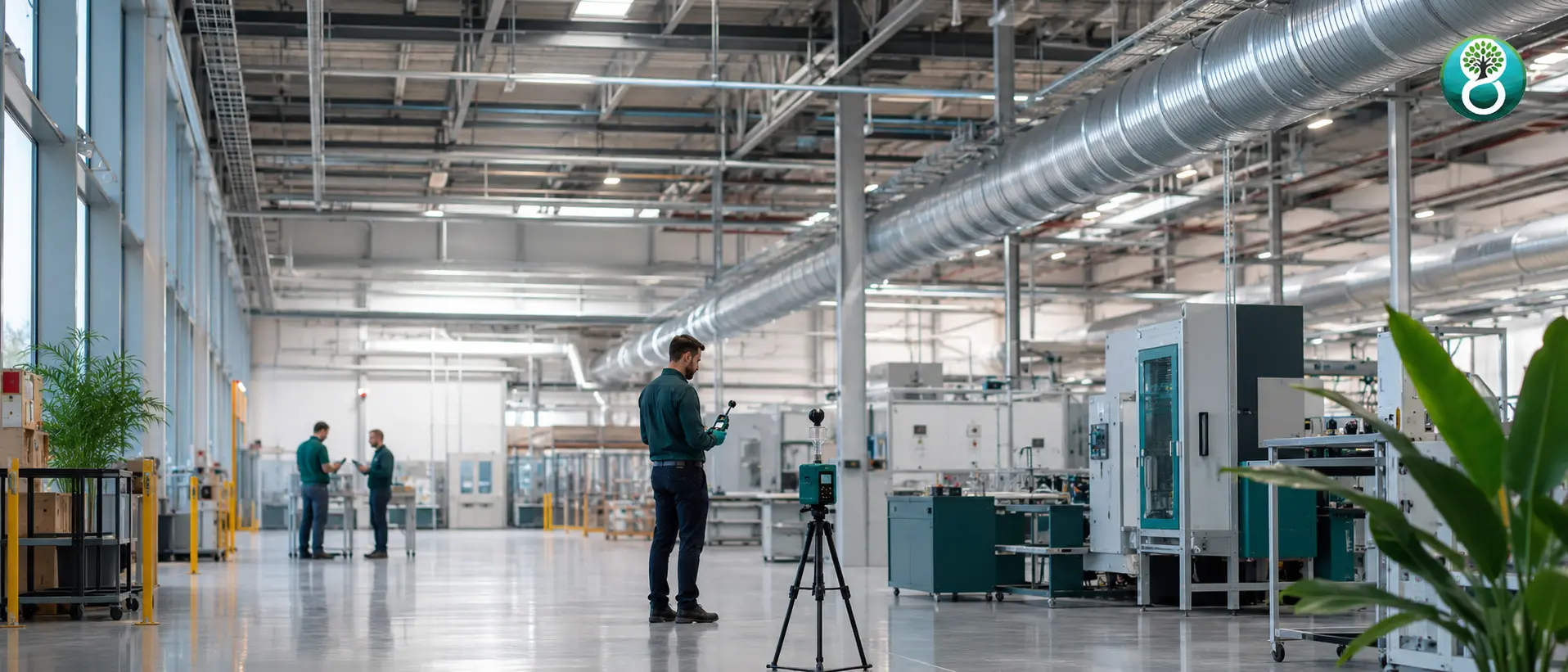
Overview of Commercial Air Testing Costs
Commercial air testing costs vary by facility size. Knowing these costs helps managers plan accurate budgets. Basic commercial evaluations usually cost between $1,000 and $3,500.
Building size directly affects final pricing. Testing large industrial sites or multi-tenant towers often costs over $5,000. Early air evaluations prevent costly health claims and protect property value.
Primary Square Footage Pricing Factors
Building size directly drives total testing costs. Larger commercial properties require more testing stations and longer field hours.
Field technician labor costs grow with total floor area. Larger spaces simply need more sample points across the building.
HVAC System Complexity and Testing Scope
HVAC layout changes testing timelines fast. Buildings with multiple HVAC zones need baseline samples from each air unit.
Complex ductwork networks need extra airflow checks. Complex mechanical systems add field sampling time and setup fees.
Airborne Contaminant and Laboratory Fees
Target pollutants drive lab testing costs. Basic dust monitoring stays low in cost.
Detailed chemical screening for volatile organic compounds (VOCs) needs certified lab work. Testing for toxic mold or hazardous asbestos adds specialized lab fees.
Typical Cost Breakdown Table
| Testing Scope | Estimated Price | Key Deliverables |
|---|---|---|
| Basic Baseline Screening | $1,000 – $2,000 | CO2, humidity, temperature, dust particulates |
| Comprehensive VOC & Mold | $2,000 – $4,500 | Air cassette samples, lab culture analysis, chemical screening |
| Industrial Hygiene Audit | $3,500 – $6,000+ | OSHA compliance, targeted chemical vapors, custom scope |
Commercial Environmental Due Diligence
Air inspections set clear safety baselines during property purchases. Real estate buyers often pair air testing with a Phase I ESA Cost: A Commercial Buyer’s Guide.
Finding hidden air issues before closing protects buyers from major financial risks.
Subsurface Contamination and Indoor Air Risks
Properties near old industrial sites face hidden environmental risks. Underground chemical vapors can crawl up into buildings through floor cracks.
Read our guide on The ‘Big Three’ Environmental Red Flags to spot underground hazards early.
Vapor Intrusion Mitigation Strategies
Subsurface vapor migration hurts indoor air quality over time. Installing protective barrier systems blocks bad chemical vapors from entering rooms.
Property developers can read Vapor Barriers: Risks, Rules & Next Steps to protect building health.
Regulatory Air Quality Compliance Standards
Commercial properties must meet federal and state environmental rules. The TCEQ Air Monitoring Network Guidelines list exact rules for tracking air pollution levels.
Keeping clean indoor air prevents outside pollution from ruining building ventilation.
Permitting Requirements for Industrial Sites
Industrial facilities with state air permits must follow active testing rules. Plant operators can review rules on the TCEQ Air Permitting Fact Sheets Page.
Learn more about state rules in our guide to Air Permits in Texas: A Simple Guide.
Financial Benefits of Early Air Inspections
Early testing stops costly operational stops. Bad air quality triggers worker health complaints and drops productivity.
Fixing moisture leaks or bad filters early saves money on emergency repairs. Clean air reports also lower annual insurance costs.
Protecting Net Operating Income and Asset Value
Good air testing records protect long-term property values. Clean air reports reassure new tenants before they sign leases.
Environmental health directly impacts Net Operating Income (NOI). Investors should review Commercial Real Estate Cap Rates & Property Condition to learn more.
Integrating Physical Building Assessments
Air testing forms one vital part of property due diligence. Checking building structure alongside air quality reveals hidden repair costs.
Read the Property Condition Assessment Guide for a complete review of air quality and physical assets.
Certified Industrial Hygiene Inspections
Hiring licensed environmental experts guarantees accurate test results. Industrial hygienists use calibrated tools to test room air.
Accredited labs analyze samples under strict quality rules. Expert reports give clear steps to fix bad air fast.
Post-Testing Engineering Reports and Remediation
Full environmental reports give clear data and action steps. Property owners get plain instructions to fix air problems.
Third-party testing protects owners from heavy regulation fines. Professional tests keep operations running smoothly.
Frequently Asked Questions
Basic testing costs between $1,000 and $3,500 for standard spaces. Large plants or office towers run from $3,500 to $6,000+ based on project scope.
Field sampling takes two to six hours based on square footage. Lab testing and final reports usually take 5 to 7 business days.
Standard tests check for CO2, carbon monoxide, dust, VOCs, mold spores, and sewer gases.
Find state air testing rules directly on the TCEQ Air Quality Rules and Strategies Page.
Test air quality once per year for baseline safety. Test air quality immediately after:
- Tenant health complaints
- Building renovations
- Water leaks
Contact SKA Environment Today
Schedule your air test today:
- Email: [email protected]
- Call : 281-598-8671
- Order Online : https://skaenvironment.com/order-form/