


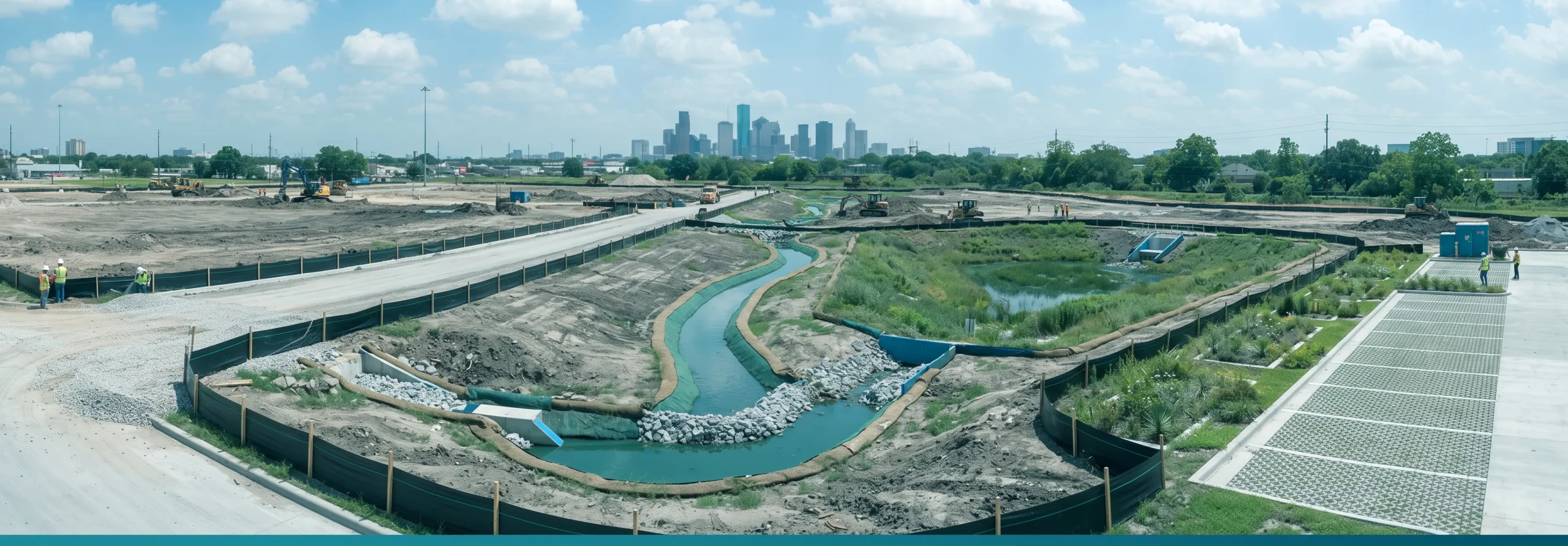
What Is a SWPPP?
A Stormwater Pollution Prevention Plan is a site-specific document that identifies potential sources of stormwater pollution and describes the practices that will be used to prevent or reduce pollutants from entering stormwater runoff.
A SWPPP may address potential pollutants such as:
● Sediment
● Construction debris
● Concrete washout
● Fuels and oils
● Paints and coatings
● Chemicals
● Waste materials
● Exposed soil
The plan also identifies stormwater control measures and explains how they will be inspected and maintained throughout the project.
A SWPPP is not simply a document prepared and filed at the beginning of construction. It is intended to be used and updated as site conditions and construction activities change.
When Is a SWPPP Required in Houston?
Stormwater requirements can apply to construction projects that disturb land.
In Texas, the Texas Commission on Environmental Quality (TCEQ) administers the Texas Pollutant Discharge Elimination System (TPDES) stormwater construction permitting program.
Construction activities that disturb one or more acres of land, including smaller projects that are part of a larger common plan of development or sale, can be subject to the TPDES Construction General Permit (CGP). (tceq.texas.gov)
This can include activities such as:
● Commercial development
● Residential development
● Road construction
● Industrial construction
● Land clearing
● Grading
● Excavation
● Utility installation
The applicable permit and requirements depend on the project and site conditions.
For this reason, determining whether a SWPPP plan in Houston is required should be one of the early steps in construction planning.
What Are the SWPPP Requirements in Houston?
The specific requirements can vary based on the project, but a construction SWPPP generally needs to address the potential sources of pollution associated with the site and the controls that will be used to manage them.
Important components can include:
Site Description
The SWPPP should describe the construction site and the nature of the planned activities.
This can include information about:
● Site location
● Existing land use
● Construction activities
● Areas to be disturbed
● Soil conditions
● Drainage patterns
● Receiving waters
Understanding how stormwater will move across the property is essential when selecting appropriate controls.
Potential Pollution Sources
The plan should identify activities and materials that could contribute pollutants to stormwater.
Examples include:
● Soil disturbance
● Stockpiles
● Fuel storage
● Concrete operations
● Waste containers
● Equipment maintenance
● Material storage
Identifying these sources allows the project team to establish controls before problems occur.
Erosion and Sediment Controls
Construction sites often have large areas of exposed soil.
Rainfall can wash loose soil away from disturbed areas and carry sediment into storm drains and waterways.
A SWPPP may therefore include measures such as:
● Silt fences
● Stabilized construction entrances
● Sediment basins
● Sediment traps
● Check dams
● Inlet protection
● Erosion control blankets
● Temporary or permanent vegetation
The appropriate controls depend on site conditions and the construction phase.
Houston’s Climate Makes Stormwater Planning Important
Stormwater management is particularly important for construction projects in Houston.
Heavy rainfall can produce significant runoff over a short period. Construction sites with exposed soil, incomplete drainage systems, and stockpiled materials may therefore be vulnerable to erosion and sediment transport.
A properly developed SWPPP Houston plan should consider the site’s drainage characteristics and the construction activities taking place at different stages of the project.
Controls should also be inspected and maintained after significant rainfall and throughout construction.
What Is Included in a SWPPP Plan in Houston?
A SWPPP plan in Houston should be tailored to the individual project rather than copied from another site.
Depending on the applicable requirements, documentation may address:
● Site maps
● Drainage patterns
● Areas of soil disturbance
● Potential pollutant sources
● Erosion controls
● Sediment controls
● Pollution prevention measures
● Inspection procedures
● Maintenance procedures
● Spill response procedures
● Stabilization requirements
● Construction sequencing
The plan should be updated when significant changes occur that affect stormwater controls or the conditions described in the SWPPP.
What Are Construction Site Inspections?
Preparing a SWPPP is only one part of stormwater compliance.
Construction sites should also be inspected according to applicable permit requirements.
Inspections help identify problems such as:
● Damaged silt fences
● Erosion
● Sediment leaving the site
● Blocked storm drains
● Poorly maintained entrances
● Exposed materials
● Inadequate stabilization
● Improper waste storage
Problems identified during inspections should be corrected promptly.
Maintaining inspection records and documenting corrective actions is also an important part of an effective stormwater management program.
What Happens If SWPPP Requirements Are Not Followed?
Failure to comply with applicable stormwater requirements can create regulatory and financial problems.
Potential consequences may include:
● Notices of violation
● Required corrective actions
● Project delays
● Additional compliance costs
● Regulatory penalties
More importantly, inadequate stormwater controls can allow sediment and other pollutants to leave the construction site and enter local waterways.
Following applicable requirements from the beginning is generally easier than trying to correct significant compliance problems later.
Professional SWPPP Services in Houston
Developing and maintaining a SWPPP can be challenging, particularly for large or complex construction projects.
Professional SWPPP services can help project owners and contractors understand applicable requirements and develop site-specific stormwater controls.
Depending on project needs, services may include:
● SWPPP preparation
● Construction stormwater permitting support
● Site inspections
● Erosion and sediment control planning
● Stormwater compliance support
● Inspection documentation
● Corrective action recommendations
● SWPPP updates
● Permit compliance assistance
Working with an experienced environmental consultant can help integrate stormwater requirements into the construction schedule rather than treating compliance as an afterthought.
How to Prepare for a SWPPP
If you are planning a construction project in Houston, consider the following steps.
- Determine the Disturbance Area
Establish how much land will be disturbed during construction.
This helps determine whether the project may fall under applicable construction stormwater permit requirements. - Review Site Conditions
Understand the site’s existing drainage patterns, soil conditions, slopes, receiving waters, and surrounding land uses. - Identify Potential Pollutants
Consider the materials, equipment, and activities that will occur during construction. - Select Appropriate Controls
Choose erosion, sediment, and pollution prevention measures based on actual site conditions. - Establish an Inspection Process
Determine who will conduct required inspections and how findings and corrective actions will be documented. - Keep the SWPPP Current
Construction sites change constantly. Update the plan when site conditions or construction activities change in ways that affect stormwater controls.
How SKA Environment Can Help With SWPPP Requirements in Houston
Stormwater compliance is an important part of responsible construction management.
SKA Environment provides SWPPP services to help construction companies, developers, property owners, and contractors address stormwater requirements throughout their projects.
Our services can support:
● SWPPP preparation
● Stormwater compliance
● Construction site inspections
● Erosion and sediment control
● Documentation
● Corrective action planning
● SWPPP updates
We can help you understand the requirements that apply to your project and develop a practical approach to managing stormwater risks.
Planning a construction project in Houston? Contact SKA Environment to discuss your SWPPP requirements and stormwater compliance needs.
Frequently Asked Questions
A Stormwater Pollution Prevention Plan is a site-specific plan that identifies potential sources of stormwater pollution and establishes measures to prevent or reduce pollutants from leaving a construction site.
Construction projects that disturb one or more acres, including qualifying projects that are part of a larger common plan of development or sale, can be subject to Texas construction stormwater permitting requirements. (tceq.texas.gov)
The Texas Commission on Environmental Quality (TCEQ) administers the Texas Pollutant Discharge Elimination System (TPDES), including construction stormwater permitting.
Not every project is subject to the same stormwater requirements. Applicability depends on factors such as the area disturbed, the type of construction activity, and whether the project is part of a larger common plan of development or sale.
A SWPPP should be maintained and updated when changes to construction activities or site conditions affect the stormwater controls or information contained in the plan.
Common problems can include inadequate erosion and sediment controls, failure to maintain controls, poor inspection documentation, uncontrolled sediment leaving the site, and failure to update the SWPPP when required.
A qualified environmental professional can help identify applicable requirements, prepare site-specific documentation, support inspections, and help address corrective actions throughout the construction project.