

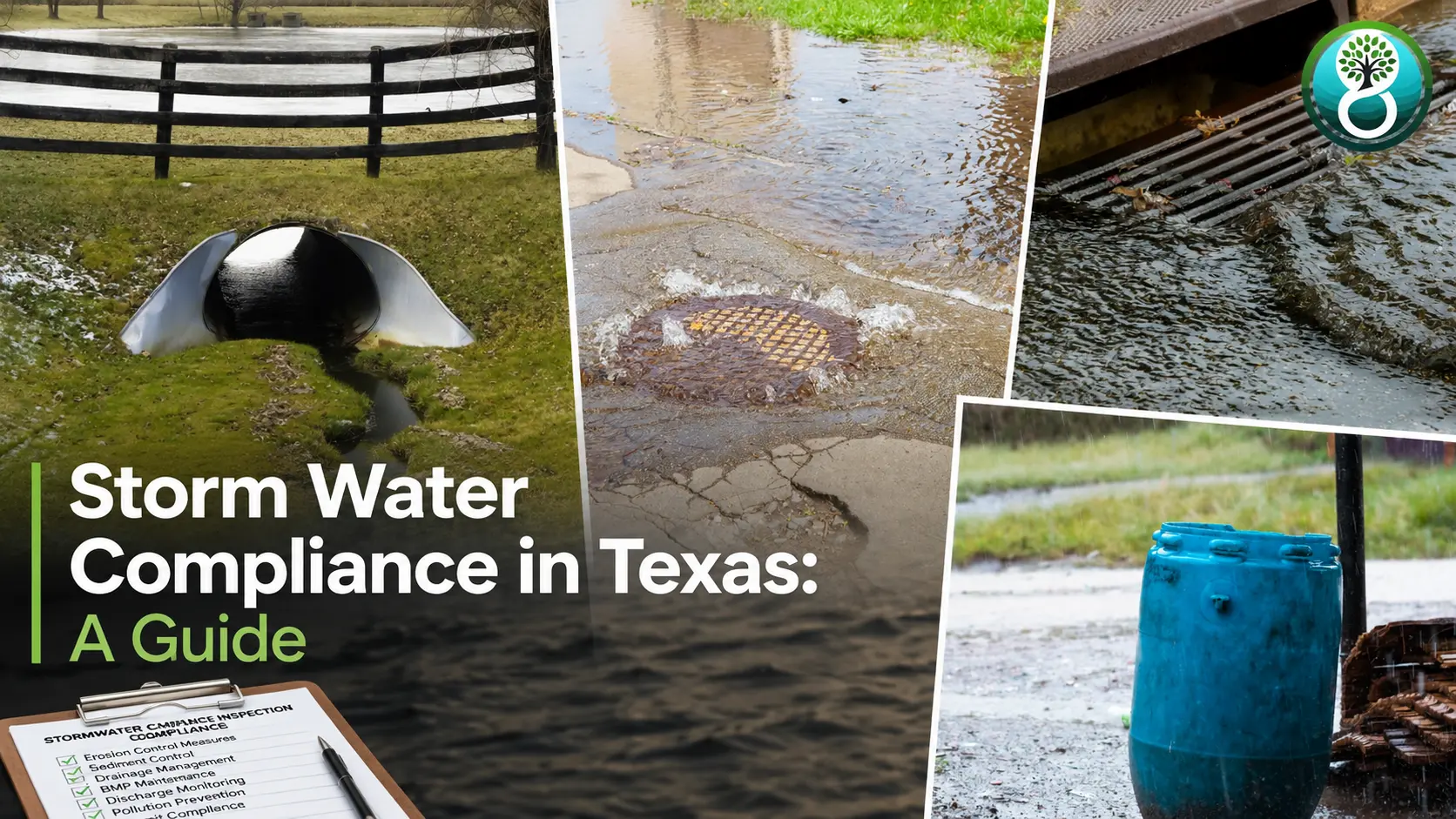
Stormwater is rainwater or melted snow that flows over the ground surface instead of soaking into the soil. In natural environments, the earth and vegetation absorb it; however, in urban areas with hard, impervious surfaces like rooftops, roads, and parking lots, this water becomes rapid runoff. Stormwater does more than flow off roofs, roads, and parking lots. As it moves across a property, it can pick up oil, sediment,
chemicals, construction debris, and other pollutants.
If that runoff reaches a storm drain, river, or lake, it can create both environmental and regulatory problems. That is why stormwater compliance matters.
For construction companies, industrial facilities, airports, and municipalities, a good stormwater program helps reduce pollution, stay prepared for inspections, and avoid unnecessary delays or penalties.
Who Should Read This Guide?
This guide is useful for:
● Construction companies and developers
● Industrial facility owners
● Airport managers
● Municipalities and public works departments
● Commercial property owners
● Environmental and facility managers
What Is Stormwater Compliance?
If you are wondering what stormwater compliance is, it simply means taking the right steps to keep polluted runoff from entering drainage systems and nearby waterways.
The exact requirements depend on the type of property and the work taking place there. In many cases, compliance includes:
● Checking whether a permit is required
● Preparing a Stormwater Pollution Prevention Plan
● Installing erosion and pollution controls
● Inspecting the site regularly
● Training employees
● Keeping accurate records
● Fixing problems as soon as they are found
Stormwater compliance is not just about completing paperwork. The controls listed in the plan must also be used and maintained in the field.
Texas Storm Water Compliance
Texas stormwater compliance is mainly overseen by the Texas Commission on Environmental Quality.
Texas stormwater permits generally apply to:
● Construction projects
● Certain industrial operations
● Municipal storm sewer systems
Permit requirements can depend on the size of the site, the type of work being performed, and how stormwater leaves the property.
It is always better to review the requirements before work begins. Discovering a permit issue after construction has started can lead to delays, extra costs, and corrective action.
Construction Storm Water Compliance
Construction stormwater compliance focuses on keeping soil, concrete waste, chemicals, and building materials from washing off a project site.
Projects that disturb one acre or more may need stormwater permit coverage. Smaller sites may also be included if they are part of a larger development plan.
Most regulated sites need a Stormwater Pollution Prevention Plan, also known as an SWPPP or SWP3. This plan explains where pollution may come from and how the site will control runoff.
Common construction controls include:
● Silt fencing
● Inlet protection
● Stabilized site entrances
● Sediment basins
● Concrete washout areas
● Covered material storage
● Temporary soil cover
● Permanent vegetation
These controls need regular attention. A damaged silt fence or blocked inlet may look like a small issue, but it can quickly lead to sediment leaving the site during heavy rain.
Planning a construction project in Texas? Reviewing stormwater requirements early can help you avoid delays, failed inspections, and costly corrective work.
Industrial Storm Water Compliance
Industrial stormwater compliance may apply when rainwater comes into contact with equipment, raw materials, chemicals, waste, or manufacturing areas.
Depending on the facility, compliance may involve:
● Preparing a pollution prevention plan
● Inspecting outdoor work and storage areas
● Monitoring discharge points
● Collecting samples
● Training employees
● Keeping inspection and monitoring records
● Documenting corrective actions
Common pollutants include oil, grease, fuel, metals, chemicals, sediment, cleaning products, and waste materials.
Facilities should also review their stormwater program whenever operations change. New equipment, storage areas, or production activities may create new sources of exposure.
Airport Storm Water Compliance
Airport stormwater compliance can be more complex because airports often have many different pollution sources in one location.
These may include:
● Aircraft fueling
● Aircraft and vehicle maintenance
● Equipment washing
● Fuel storage
● Material storage
● Deicing and anti-icing operations
● Waste handling areas
Airport operators need a clear understanding of how water moves across the property and where it leaves the site.
Drainage maps, outfall inspections, spill procedures, employee training, and proper storage practices all play an important role.
Without the right controls, fuel, oil, cleaning chemicals, rubber particles, and deicing materials can enter the stormwater system.
Phase II Storm Water Permit Compliance Evaluations
Phase II stormwater permit compliance evaluations look at how well a municipality is managing runoff through its storm sewer system.
These reviews may cover:
● Public education and outreach
● Public participation
● Illicit discharge detection
● Construction-site inspections
● Post-construction runoff controls
● Municipal pollution prevention
● Staff training
● Enforcement procedures
● Annual reports and records
The goal is to find gaps in the program before they turn into larger compliance problems.
A municipality may have the right documents in place but still needs stronger inspection procedures, better recordkeeping, or more consistent follow-up.
Common Storm Water Compliance Problems
Many stormwater issues happen because a plan exists on paper but is not being followed on-site.
Common problems include:
● Missed inspections
● Outdated pollution prevention plans
● Damaged erosion controls
● Uncovered chemicals or waste
● Poor employee training
● Incomplete records
● Unreported corrective actions
● Missed permit deadlines
Regular internal reviews can help identify these problems before a formal inspection.
Choosing Storm Water Compliance Companies in Texas
When searching for stormwater compliance companies in Texas, look for a consultant with experience in both permitting and real site conditions.
A stormwater consultant may help with:
● Permit reviews
● SWPPP or SWP3 preparation
● Construction inspections
● Industrial facility inspections
● Stormwater sampling
● Phase II compliance evaluations
● Employee training
● Corrective action planning
● Recordkeeping support
The best consultant will not only explain what the permit requires. They will also help your team understand what needs to happen on the ground.
Frequently Asked Questions
The main purpose is to prevent pollutants from entering drains, rivers, lakes, and other waterways. It also helps businesses and municipalities meet permit requirements.
Construction operators, certain industrial facilities, airports, and municipalities may need permit coverage. The answer depends on the activity, site size, and discharge conditions.
It may be required when a project disturbs one acre or more. Smaller sites may also be covered if they are part of a larger common development.
The report reflects conditions observed at the time of inspection. Its usefulness may An SWPPP or SWP3 is a site-specific plan that identifies pollution risks and explains how runoff, inspections, maintenance, and corrective actions will be managed.
An inspector may review erosion controls, drainage areas, storage locations, outfalls, waste areas, records, and any previously identified problems.
The schedule depends on the permit and site conditions. Some sites may also need inspections after certain rainfall events.
Possible consequences include corrective action, fines, project delays, regulatory notices, and higher environmental liability.
Yes. A consultant can inspect the site, review the permit, update the pollution prevention plan, identify gaps, and recommend practical corrective actions.
How SKA Environmental Can Help
Stormwater requirements can be difficult to manage when permits, inspections, field conditions, and records all need attention at the same time.
SKA Environmental helps construction teams, industrial facilities, airports, property owners, and municipalities stay on top of their stormwater responsibilities.
Our team can assist with permit reviews, SWPPP preparation, inspections, compliance evaluations, sampling support, and corrective action planning.
Contact SKA Environmental for practical stormwater compliance support in Texas.