

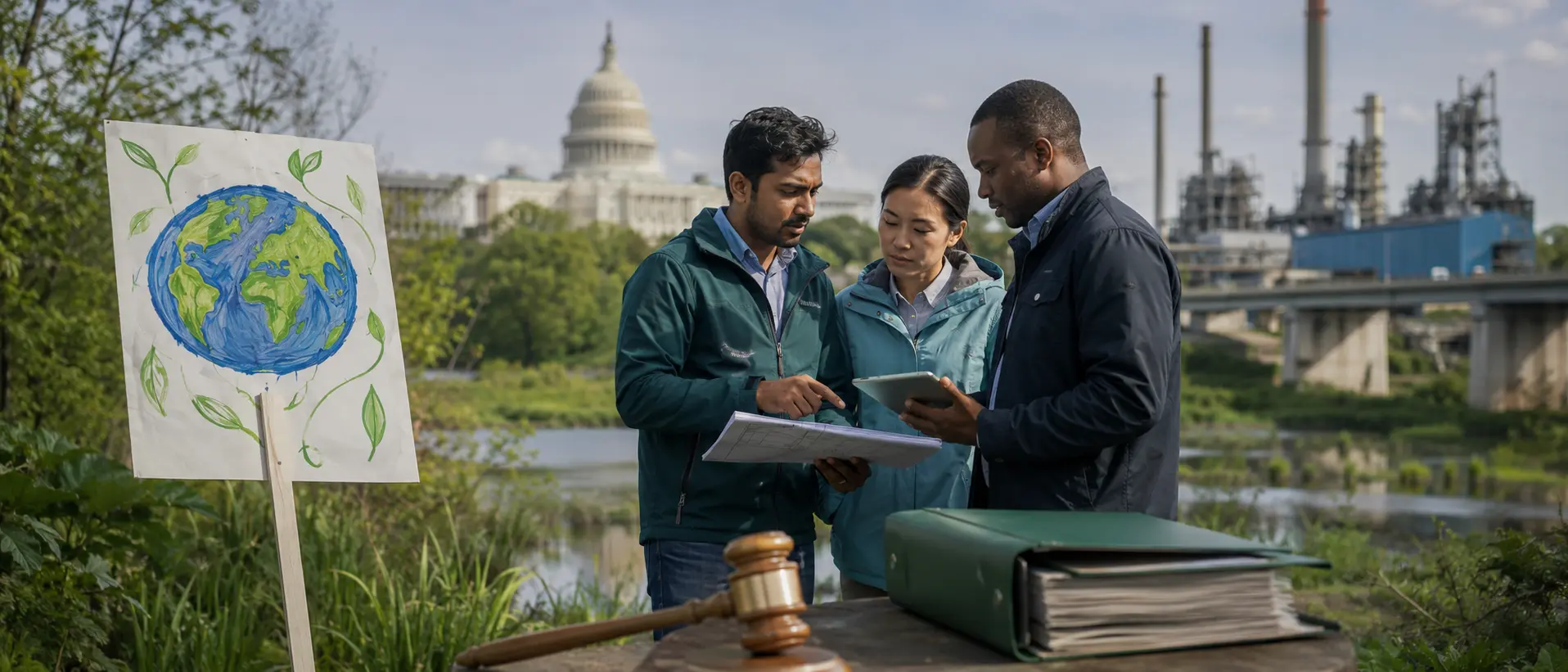
Environmental considerations can have a major impact on how a project moves forward, especially when federal funding, permits, approvals, or federal land are involved. That is where the National Environmental Policy Act (NEPA) comes into the picture.
A NEPA environmental review helps decision-makers understand how a proposed project could affect the surrounding environment before major commitments are made. For developers, agencies, engineering teams, and property owners, understanding the process early can help reduce delays and identify environmental concerns before they become larger problems.
This guide explains how the NEPA process works, when a NEPA environmental assessment may be required, and some important NEPA environmental review limitations to keep in mind.
Who Should Read This Guide?
This guide may be useful for:
● Developers working on projects involving federal permits or funding
● Engineering and construction companies
● Government agencies and municipalities
● Property owners planning infrastructure or redevelopment projects
● Consultants involved in environmental due diligence
● Organizations looking for NEPA environmental review services
What Is NEPA Environmental Review?
NEPA is a federal environmental law that requires federal agencies to consider the environmental effects of certain proposed actions before making decisions.
A NEPA environmental review is therefore not simply an environmental inspection of a property. It is a decision-making process that considers how a proposed federal action or federally connected project could affect the environment.
Depending on the project, the review may evaluate issues such as:
● Air quality
● Water resources
● Wetlands
● Wildlife and habitat
● Noise
● Land use
● Cultural and historic resources
● Transportation impacts
● Community effects
The level of review depends on the type of project and the potential significance of its environmental impacts.
When Is a NEPA Review Required?
A NEPA review generally becomes relevant when a proposed action involves a federal agency.
Examples can include projects that:
● Receive federal funding
● Require certain federal permits or approvals
● Take place on federal land
● Are directly carried out by a federal agency
Not every project involving the federal government requires the same level of environmental analysis.
Some projects may qualify for a categorical exclusion, while others may require a more detailed environmental assessment under NEPA.
Understanding the likely review pathway early can help project teams plan schedules, budgets, studies, and permitting requirements more effectively.
What Is a NEPA Environmental Assessment?
A NEPA environmental assessment, commonly called an EA, is used to determine whether a proposed project is likely to create significant environmental impacts.
The assessment generally examines:
● The purpose and need for the proposed action
● Potential environmental impacts
● Reasonable alternatives
● Measures that could reduce environmental effects
An environmental assessment NEPA process can lead to different outcomes depending on what the analysis finds.
If significant impacts are not expected, the agency may issue
a Finding of No Significant Impact, commonly known as a FONSI.
If potentially significant environmental impacts remain, a more detailed Environmental Impact Statement may be necessary.
Why Does the Environmental Assessment Matter?
Environmental issues discovered late in project development can affect construction schedules, permitting, financing, and design.
Completing the appropriate assessment earlier gives project teams more time to understand potential concerns and consider practical alternatives.
For example, a planned development could affect wetlands, protected habitat, historic resources, or surrounding communities. Identifying these concerns during the planning stage provides an opportunity to adjust the project before construction begins.
The Main Stages of a NEPA Review
Although every project is different, a typical NEPA environmental review may involve several broad steps.
1.Determine Whether NEPA Applies
The first step is identifying whether there is a federal action that triggers NEPA review.
This may involve reviewing project funding, permits, approvals, land ownership, and agency involvement.
2.Determine the Appropriate Level of Review
Depending on the project and the responsible federal agency, the project may proceed through:
Categorical Exclusion (CE) Used for categories of actions that normally do not have significant environmental impacts, subject to applicable agency procedures and project-specific circumstances.
Environmental Assessment (EA) Used when the significance of potential environmental impacts needs further evaluation.
Environmental Impact Statement (EIS) Used for actions expected to have significant environmental effects and requiring more detailed analysis.
3.Collect Environmental Information
Consultants and project teams may gather information about existing site and surrounding environmental conditions.
Depending on the project, studies may involve wetlands, endangered species, cultural resources, traffic, noise, air quality, water resources, or other environmental factors.
4.Evaluate Alternatives and Impacts
NEPA analysis considers the potential effects of the proposed action and, where required, reasonable alternatives.
The goal is to provide decision-makers with useful environmental information before the agency makes its final decision.
5.Complete Documentation and Agency Review
Environmental findings are documented and submitted through the appropriate agency review process.
Good documentation is particularly important because NEPA is not simply a technical study. The administrative record and decision-making process are also important parts of compliance.
Planning a federally connected project?
SKA Environmental can help project teams identify environmental concerns, organize technical information, and navigate the documentation needed for an efficient NEPA review.
Why Early NEPA Planning Matters
One of the easiest ways for environmental review to disrupt a project is to begin the process too late.
Imagine that engineering plans are nearly complete when a wetland, protected habitat, or historic resource concern is identified. Redesigning the project at that stage can be far more difficult than addressing the issue during initial planning.
Starting the NEPA environmental assessment process earlier may help teams:
● Identify potential environmental constraints
● Coordinate with agencies sooner
● Plan supporting studies
● Evaluate alternatives before designs are finalized
● Reduce avoidable project delays
● Maintain clearer environmental documentation
NEPA should therefore be considered part of project planning rather than something added just before approval.
NEPA Environmental Review Limitations
Understanding NEPA environmental review limitations is equally important.
A NEPA review does not automatically mean a project will have no environmental impact. NEPA is primarily a procedural law requiring federal agencies to evaluate environmental consequences and consider relevant information during decision-making.
A NEPA review also does not replace every other environmental requirement.
Depending on the project, separate compliance may still be needed under laws or programs covering areas such as:
● Wetlands and waterways
● Endangered species
● Historic resources
● Air emissions
● Stormwater
● Hazardous materials
● State and local environmental requirements
Another important limitation is scope. The information required for one project may be very different from another. A transportation project, industrial development, energy facility, and public infrastructure project can each involve different environmental concerns.
This is why experienced environmental professionals can be valuable during the planning stage.
What Do NEPA Environmental Review Services Include?
Professional NEPA environmental review services can support project owners and agencies throughout different stages of environmental evaluation.
Depending on the project, services may include:
● Initial NEPA applicability review
● Environmental research and data collection
● Site assessments
● Environmental Assessment support
● Technical environmental studies
● Alternatives analysis
● Impact evaluation
● Mitigation planning
● Agency coordination support
● Environmental documentation
The exact scope should be tailored to the project, responsible federal agency, and environmental conditions involved.
How SKA Environmental Can Help
NEPA documentation can involve multiple technical disciplines, agency requirements, and environmental considerations. Having the right environmental team involved early can make the process easier to manage.
SKA Environmental works with developers, property owners, government entities, and project teams to evaluate environmental conditions and support regulatory due diligence.
Our team can help identify potential environmental concerns, coordinate necessary assessments, and develop clear documentation that supports the NEPA environmental review process.
The goal is simple: identify potential issues early enough for project teams to make informed decisions before those issues become costly obstacles.
Frequently Asked Questions
A NEPA environmental review is the process used by federal agencies to evaluate the potential environmental effects of proposed federal actions before making certain decisions.
A NEPA environmental assessment is a document used to evaluate potential environmental impacts and determine whether those impacts may be significant enough to require a more detailed Environmental Impact Statement.
No. Some activities may qualify for a categorical exclusion, while projects with potentially significant impacts may require an Environmental Impact Statement. The appropriate level of review depends on the project and agency requirements.
There is no single timeline that applies to every project. The duration can depend on the project’s complexity, environmental issues, technical studies, agency coordination, and the level of NEPA review required.
No. One of the important NEPA environmental review limitations is that completing NEPA does not automatically satisfy every federal, state, or local environmental requirement. Additional permits, consultations, or studies may still be necessary.
Ideally, environmental review should begin during the early planning stages. Early evaluation gives project teams more flexibility to respond to environmental concerns before design, financing, or construction decisions become difficult to change.
Start Your NEPA Review With the Right Environmental Team
Federal environmental review can become complicated when it is treated as a last-minute requirement. Early planning makes it easier to understand environmental conditions, coordinate technical studies, and address potential concerns before they affect the project schedule.
If your project involves federal funding, approvals, permits, or another federal connection, SKA Environmental can provide NEPA environmental review services tailored to your project’s needs.
Contact SKA Environmental today to discuss your project and determine the right next step for your NEPA environmental review.