


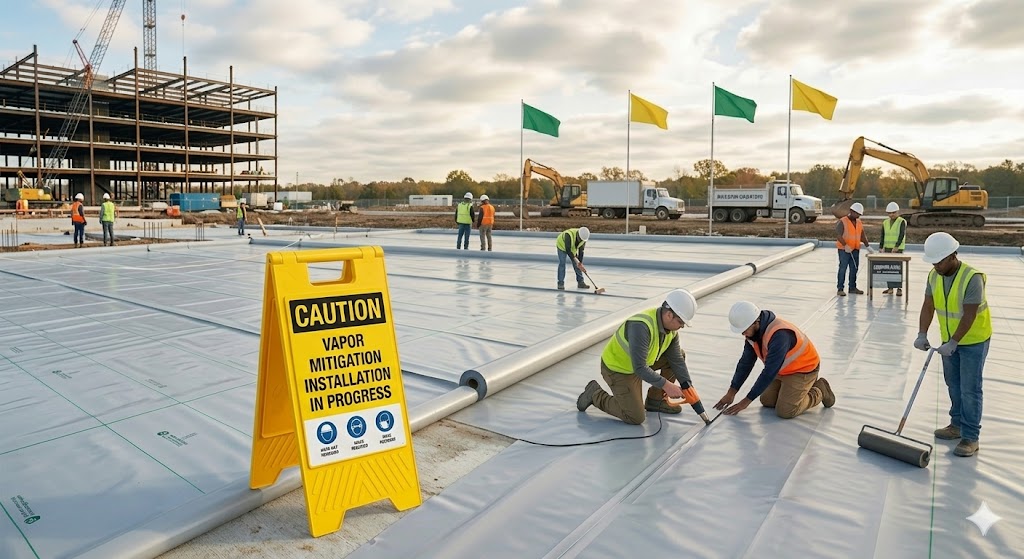
In the current regulatory climate, a Phase I or II Environmental Site Assessment (ESA) is more than a checklist item; it is the primary diagnostic tool for project viability. When these assessments identify the potential for Vapor Intrusion (VI)—the migration of volatile organic compounds (VOCs) from the subsurface into indoor air—the path forward requires a strategy that balances compliance with long-term financial protection.
For the modern developer, an engineered Vapor Barrier is the critical mechanism for mitigating these risks, ensuring that environmental liabilities do not erode the asset’s terminal value.
The Impact on Underwriting and Property Insurance
A proactive vapor mitigation strategy is often the “hidden key” to favorable financing and insurance terms. Carriers and lenders are increasingly scrutinizing vapor encroachment (ASTM E2600) as a standalone risk factor.
- Environmental Liability & Risk Transfer: A professionally installed, documented barrier serves as a “physical warranty.” It simplifies the process of securing Environmental Impairment Liability (EIL) and Pollution Legal Liability (PLL) insurance by providing underwriters with an engineering control that lowers the probability of future third-party claims
- Securing the Exit Strategy: At divestiture, a certified vapor barrier eliminates a major deal-killer. Institutional buyers and their lenders are far more likely to proceed when a permanent, verifiable solution is already integrated into the foundation, removing the specter of future “re-opener” liabilities.
Why Proactive Installation is the Only Choice
The financial delta between proactive and reactive mitigation is stark. In the context of project deliveries, waiting to “see if it’s an issue” is a high-stakes gamble.
- The Proactive Path: Installing a high-performance chemical vapor barrier (such as an EVOH or spray-applied membrane) during construction is a predictable, manageable line item in the CAPEX budget.
- The Reactive Path: If vapor issues are discovered post-occupancy, the “fix” involves sub-slab depressurization—drilling through existing floor finishes and installing manifolds. This causes massive tenant disruption and typically costs 5x to 10x the original installation price.
Integrating Mitigation into Project Deliveries
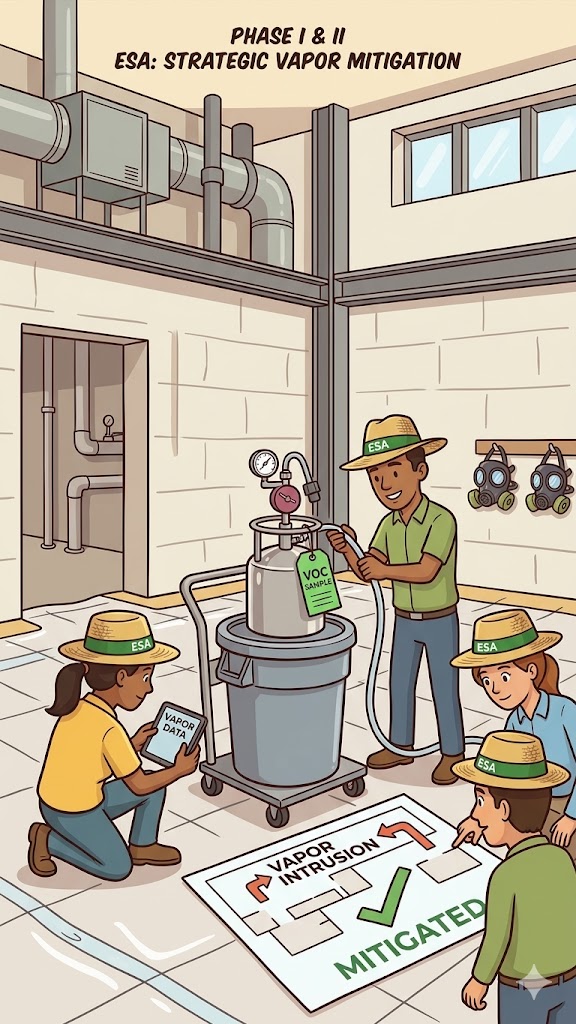
Successful development on “Brownfield” or impacted sites depends on a seamless transition from Phase II findings to engineering solutions.
- Technical Precision: Selection of a barrier must be chemically compatible with the specific “Chemicals of Concern” (e.g., chlorinated solvents vs. petroleum) identified during the Phase II ESA.
- Quality Assurance: To ensure the barrier functions as a true engineering control, it should undergo third-party verification, such as smoke testing, before the slab is poured. This provides the developer with the necessary “Clean Hands” documentation for future liability protection.
Summary
A vapor barrier is not merely a technical requirement; it is a strategic investment in the safety, insurability, and marketability of a commercial asset. By addressing vapor intrusion early in the due diligence process, developers lock in project timelines, protect their long-term bottom line, and ensure the highest standard of safety for future occupants.