



In the high-stakes world of commercial real estate and corporate acquisitions, due diligence checklists are often dominated by environmental reports, zoning laws, and financial audits.
However, an increasingly critical—and often overlooked—component is compliance with the Americans with Disabilities Act (ADA). Failing to identify ADA violations during the due diligence phase can lead to astronomical remediation costs, legal battles, and significant brand damage post-acquisition.
Physical Barriers and “Readily Achievable” Barrier Removal
The ADA requires that “public accommodations” remove architectural barriers in existing facilities when such removal is “readily achievable”—meaning it can be accomplished without much difficulty or expense
. During due diligence, buyers must assess whether the property meets current 2010 ADA Standards for Accessible Design.
Common physical issues identified during inspections include:
- Parking: Non-compliant parking space dimensions or missing “van-accessible” signage.
- Path of Travel: Improper ramp slopes or lack of level landings.
- Restrooms: Fixtures that lack proper clearance or grab bars installed at incorrect heights.
If a buyer assumes ownership of a non-compliant building, they inherit the legal obligation to fix these issues, regardless of whether the previous owner was ever cited.
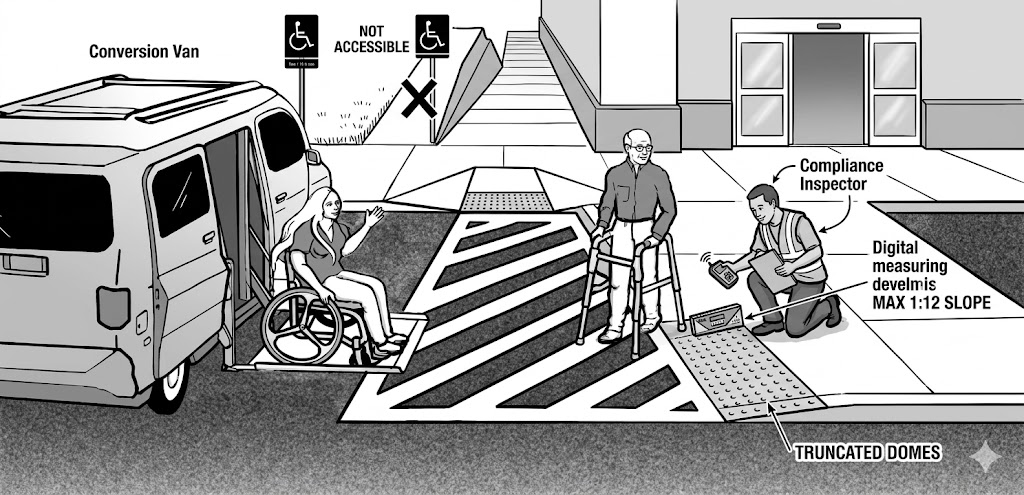
Mitigating Risk Through Physical Surveys
To protect your investment, ADA compliance should be integrated into the early stages of due diligence. This involves hiring specialized consultants to perform inspections or physical surveys. Furthermore, purchase agreements should include specific representations and warranties regarding ADA compliance, potentially backed by indemnification clauses or price adjustments if significant barriers are discovered. By addressing these issues before the ink is dry, investors can ensure that their new asset is truly accessible to everyone—and shielded from unnecessary litigation.
Pro Tip:
Don’t rely on a building’s “Certificate of Occupancy” as proof of ADA compliance. Local building codes and federal ADA requirements are distinct; a building can be “code legal” but still violate federal civil rights law.