


Buying commercial real estate is an exciting milestone, but beneath the surface of that “perfect” property could lie a million-dollar liability. This is where the Phase I Environmental Site Assessment (ESA) comes in.
While many investors view it as a “box to check” for a bank loan, understanding the costs and the value it provides is critical to protecting your investment.
1. Why is a Phase I ESA Required?
A Phase I ESA is the gold standard for environmental due diligence. It is primarily required for three reasons:
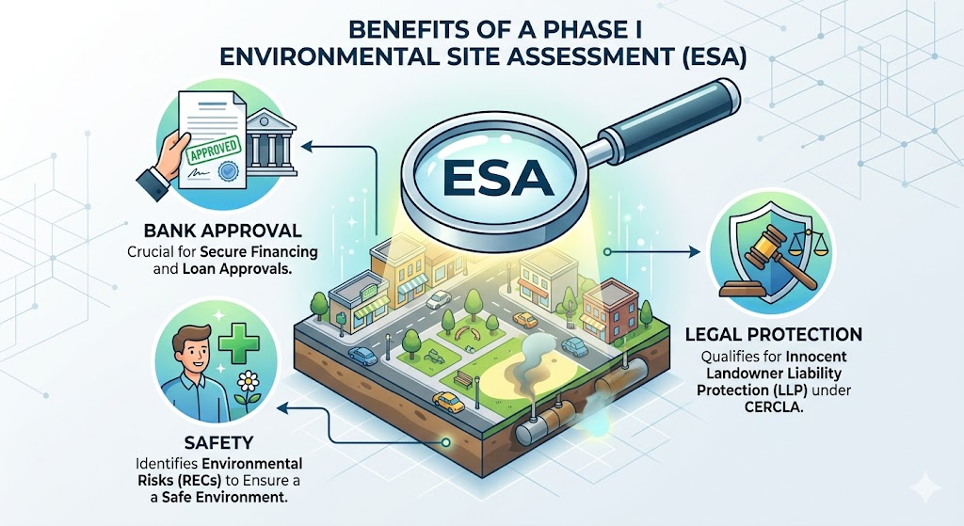
- Lender Requirements: Most banks will not finance a commercial mortgage without a Phase I ESA to ensure their collateral isn’t devalued by contamination.
- LLP (Landowner Liability Protections): Under the federal law known as CERCLA, a buyer can be held responsible for cleaning up contamination they didn’t cause. Completing a Phase I ESA according to ASTM E1527-21 standards qualifies you for “Innocent Landowner” protections.
- Risk Management: It identifies potential “hidden” issues like old underground storage tanks (USTs), chemical leaks, or historical dry-cleaning solvents that could cost hundreds of thousands to remediate.
2. Elements That Contribute to the Cost
In 2024–2025, a standard Phase I ESA typically ranges from $1,800 to $4,500. The price isn’t arbitrary; it covers several labor-intensive steps:
- Historical Records Research: Consultants must dig through 50+ years of fire insurance maps (Sanborn maps), city directories, and aerial photos.
- Database Search Fees: Accessing federal, state, and tribal environmental databases (like EPA Superfund lists) costs money.
- The Site Reconnaissance: A qualified Environmental Professional (EP) must physically visit the site to look for pipes, stained soil, or stressed vegetation.
- Interviews: Talking to past and present owners, as well as local fire or health departments.
3. How Complexity Drives the Price Up
Not all properties are created equal. If you are quoted more than the “average” price, it’s likely due to one of these complexity factors:
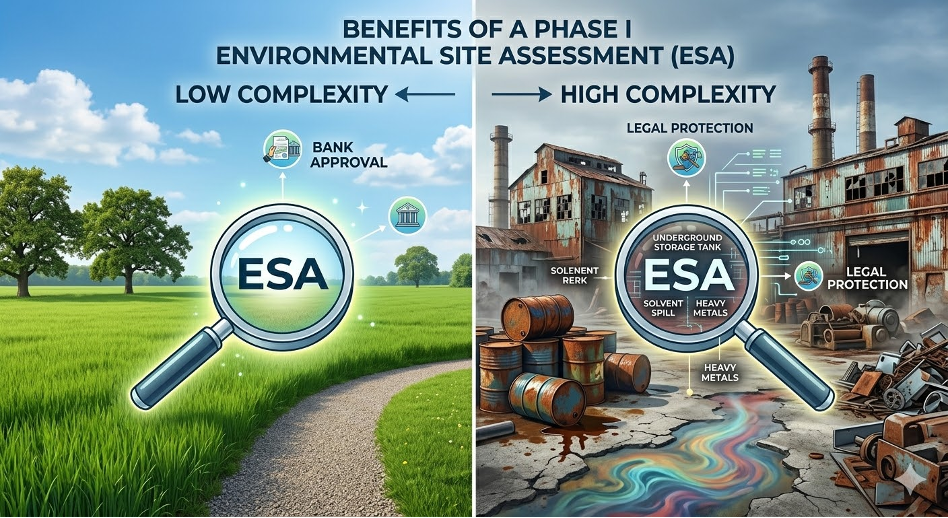
- The “History” Factor: A vacant field is easy to research. A property that has been a gas station, a print shop, and a textile mill over the last 80 years requires significantly more hours of investigation.
- Acreage and Structures: Inspecting a 50-acre industrial park with ten buildings takes much longer than a half-acre retail strip.
- Location & Travel: If the site is remote or in a dense urban center with complex local regulatory filings (like New York City or Chicago), expect higher fees.
- Turnaround Time: Standard delivery is 2–3 weeks. If you need a “rush” report in 5–7 days, you will likely pay a 20–50% premium.
4. What Happens if a REC is Found?
The goal of a Phase I is to find RECs (Recognized Environmental Conditions). A REC indicates that there is a presence or likely presence of hazardous substances or petroleum products on the property.
If a REC is identified:
- Don’t Panic: A REC doesn’t always mean the deal is dead; it just means more information is needed.
- Phase II Trigger: The consultant will likely recommend a Phase II ESA. This involves physical testing—drilling soil borings or installing groundwater monitoring wells—to see if the REC has actually caused contamination.
- Negotiation Tool: You can use the findings to negotiate a lower purchase price or require the seller to perform the cleanup before closing.